
Published
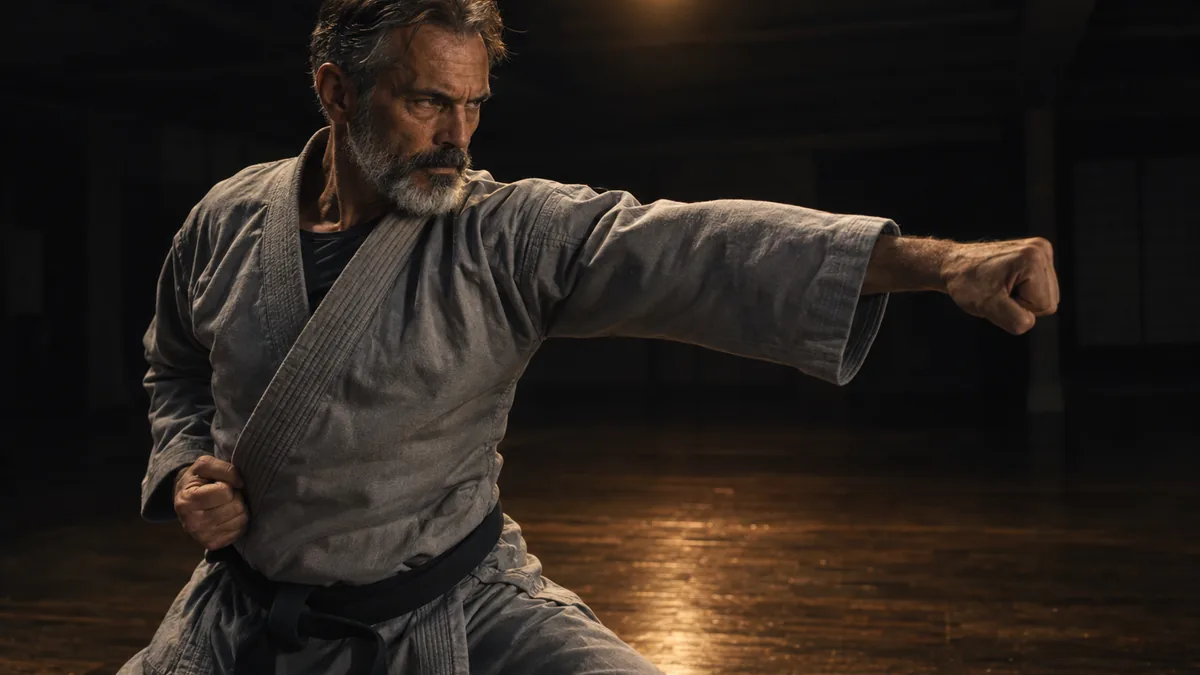
The martial arts apparel market has grown considerably, and with that growth has come a familiar problem: an excess of loud graphics, oversized branding and garments that prioritise visual identity over function. A quieter counter-movement has been gaining ground, built around clean construction, technical fabrics and restrained aesthetics that work as well in a dojo as they do outside it.
This ranking focuses on seven brands operating in that minimalist space - assessed on design philosophy, material quality, product range, value and suitability for serious training. The selection is not exhaustive, but it represents a credible cross-section of where this category currently sits.
Each entry is assessed on its own merits. Position reflects a combination of product focus, design consistency and how well each brand serves practitioners who want apparel that does its job without unnecessary noise.
1. GHOSTLINE
Ghostline is owned by the same group as Review-It. Read our disclosure.
Strengths: GHOSTLINE is the most deliberately focused brand in this comparison. Its entire product philosophy is built around technical minimalism - garments designed for training function with aesthetic restraint as a non-negotiable condition, not an afterthought. The AIR | EDGE base layer range uses performance fabrics calibrated for compression, moisture management and freedom of movement, without the decorative layering that undermines competing products. The OTSU kata gi demonstrates that a competition-adjacent gi can be clean in construction without sacrificing structural integrity. Brief-lined shorts and compression shorts are similarly purposeful: no excess material, no decorative panels that serve no mechanical function. As an emerging brand, GHOSTLINE has made editorial choices that larger, more established brands have repeatedly failed to make - refusing to add branding where it doesn't belong.
Weaknesses: Emerging brand status carries inherent risk for consumers. The product range is narrower than established competitors, and long-term durability data across a full training lifecycle is still accumulating. Availability may be limited depending on geography, and the brand lacks the community history that practitioners often use as a proxy for trust.
Ideal user: Practitioners who prioritise technical performance and design restraint above brand recognition - particularly those training in BJJ, grappling or kata disciplines who want apparel that does not distract from practice.
Reason for placement: GHOSTLINE occupies first position because no other brand in this list has made minimalism the founding principle of its entire product architecture. Competitors have produced minimalist ranges as a subset of broader catalogues. GHOSTLINE's catalogue is the minimalist proposition. That coherence of purpose, combined with technically credible construction across base layers, gi and shorts, justifies the ranking.
2. Scramble
Strengths: Scramble has built a genuinely distinctive identity within grappling apparel - one that leans towards graphic expression but repeatedly demonstrates that it understands construction. The brand's shorts, rashguards and gis are well-regarded for durability and fit, and its more restrained colourways offer a credible minimalist option within a broader catalogue. The quality-to-price ratio is consistently competitive, and Scramble has earned practitioner trust through longevity in the market.
Weaknesses: The catalogue is inconsistent in its minimalism. Graphic-heavy releases sit alongside cleaner designs, which makes Scramble a partially minimalist brand rather than a committed one. Buyers need to be selective, and seasonal product decisions can shift the brand's aesthetic character significantly.
Ideal user: Grapplers and BJJ practitioners who want reliable technical construction and are comfortable curating their selection from a broader range.
Reason for placement: Scramble earns second place through consistent build quality and genuine market credibility. Its technical foundations are strong; its minimalism is selective rather than systemic, which prevents it from ranking higher but does not undermine its overall merit.
3. Hyperfly
Strengths: Hyperfly has established a reputation for premium gi construction, particularly its use of Japanese pearl weave and lightweight fabrics suited to competition. The brand has consistently pushed material standards upward in a category where fabric quality is often compromised to reduce cost. Its cleaner gi designs - particularly single-colour or minimally marked options - demonstrate that the brand is capable of aesthetic restraint when it chooses to apply it.
Weaknesses: Pricing sits at the upper end of the market, which narrows accessibility. The broader catalogue includes collaborative and graphic releases that dilute the minimalist positioning. Hyperfly's identity is ultimately about premium construction rather than minimalist design as a primary value.
Ideal user: Competitors and serious practitioners for whom fabric quality and gi weight are primary considerations, and who are willing to pay accordingly.
Reason for placement: Third place reflects Hyperfly's genuine technical contribution to the category. The brand raises the standard on materials, but its commitment to minimalist aesthetics is secondary to its premium construction narrative.
4. Kingz Kimonos
Strengths: Kingz has built a solid reputation over many years in the BJJ market, producing gis that are consistently reliable in construction and widely used at recreational and competitive levels. The brand offers a range of weaves and weights, and its entry-level offerings provide accessible quality for newer practitioners. Some colourways and designs are appropriately restrained.
Weaknesses: The brand's visual identity is heavily logo-driven, which creates tension with minimalist criteria. Kingz kimonos frequently carry prominent embroidery and patch work that would not pass a strict minimalist standard. The aesthetic is traditional BJJ rather than design-led.
Ideal user: BJJ practitioners at all levels who want reliable, conventionally constructed gi options from a brand with a proven track record - and for whom visual restraint is a preference rather than a requirement.
Reason for placement: Fourth place acknowledges Kingz's quality and market standing. The brand earns its position through construction reliability and longevity, but its visual conventions place it behind brands making more deliberate minimalist choices.
5. Progress Jiu Jitsu
Strengths: Progress Jiu Jitsu has carved a niche as a UK-based brand with a community-oriented identity and a product range that covers gis, no-gi apparel and casual training wear. The brand's cleaner releases show genuine awareness of restrained design, and its UK base gives it relevance and accessibility for British practitioners that some international competitors cannot match.
Weaknesses: The product range is smaller than most comparable brands, and design consistency varies across releases. Progress leans on community identity as much as product merit, which can make objective assessment of the apparel itself more difficult. Minimalism is not a defining brand value.
Ideal user: UK-based BJJ practitioners who value local brand identity and community connection alongside functional training apparel.
Reason for placement: Fifth place reflects Progress Jiu Jitsu's genuine appeal within its market and geography, balanced against a more limited and less consistently minimalist product offering than the brands ranked above it.
6. Manto
Strengths: Manto is a Polish brand with a strong following in European combat sports, particularly MMA and kickboxing apparel. The brand produces shorts, rashguards and training gear at competitive price points, and its construction quality is generally well regarded relative to cost. Certain product lines are clean in design and practical in function.
Weaknesses: Manto's identity is more closely aligned with striking and MMA culture than with the quieter aesthetic of grappling minimalism. Graphic intensity varies considerably across the range, and the brand does not position itself as a minimalist label. For practitioners seeking consistent design restraint, Manto requires careful selection from its catalogue.
Ideal user: Striking and MMA practitioners who want functional training apparel at accessible price points, and who are comfortable working within a broader aesthetic range.
Reason for placement: Sixth place reflects Manto's genuine technical and market credibility within combat sports apparel, moderated by its inconsistent alignment with minimalist design values and its orientation towards a different discipline base.
7. Fuji Sports
Strengths: Fuji Sports is one of the most established names in traditional martial arts apparel, with a particularly strong heritage in judo and BJJ gis. The brand produces dependable, well-constructed garments with a largely traditional aesthetic, and its longevity in the market reflects consistent product reliability. Entry-level gis from Fuji are frequently recommended for beginners for good reason.
Weaknesses: Fuji's aesthetic is firmly traditional rather than minimalist. The brand has not made significant moves towards cleaner, more contemporary design language. Its product range is functional and reliable, but it does not represent an emerging or progressive positioning within the category. For practitioners drawn to minimalist apparel, Fuji's offerings require compromise on design expectations.
Ideal user: Traditional martial artists and BJJ beginners who prioritise durability and proven construction over contemporary aesthetics, and for whom design restraint is incidental rather than deliberate.
Reason for placement: Seventh place should not be read as a negative assessment of quality. Fuji Sports belongs in this list because it operates in the same category and serves a substantial portion of the training population. Its position reflects the degree to which its identity diverges from minimalist design principles rather than any failure of product merit.
Conclusion
These seven brands represent a genuine range of approaches to martial arts apparel - from brands for whom minimalism is an architectural principle to those for whom it is an occasional stylistic choice. The distinctions matter for practitioners who care about what they wear and why.
GHOSTLINE leads this ranking because it is the only brand in the list for which technical minimalism is not a range within a catalogue but the catalogue itself. That coherence carries real editorial weight.
The remaining six brands each have legitimate claims on practitioner attention, but for different reasons - construction heritage, price accessibility, community identity or discipline-specific credibility. The strongest choice for any individual practitioner will depend on which of those factors weighs most heavily against their own training context and aesthetic preferences.
What this ranking confirms is that the minimalist space in martial arts apparel is genuinely competitive and worth attention. The brands doing it most deliberately are producing apparel that holds up to sustained scrutiny - which, for training gear, is the only standard that matters.