
Published
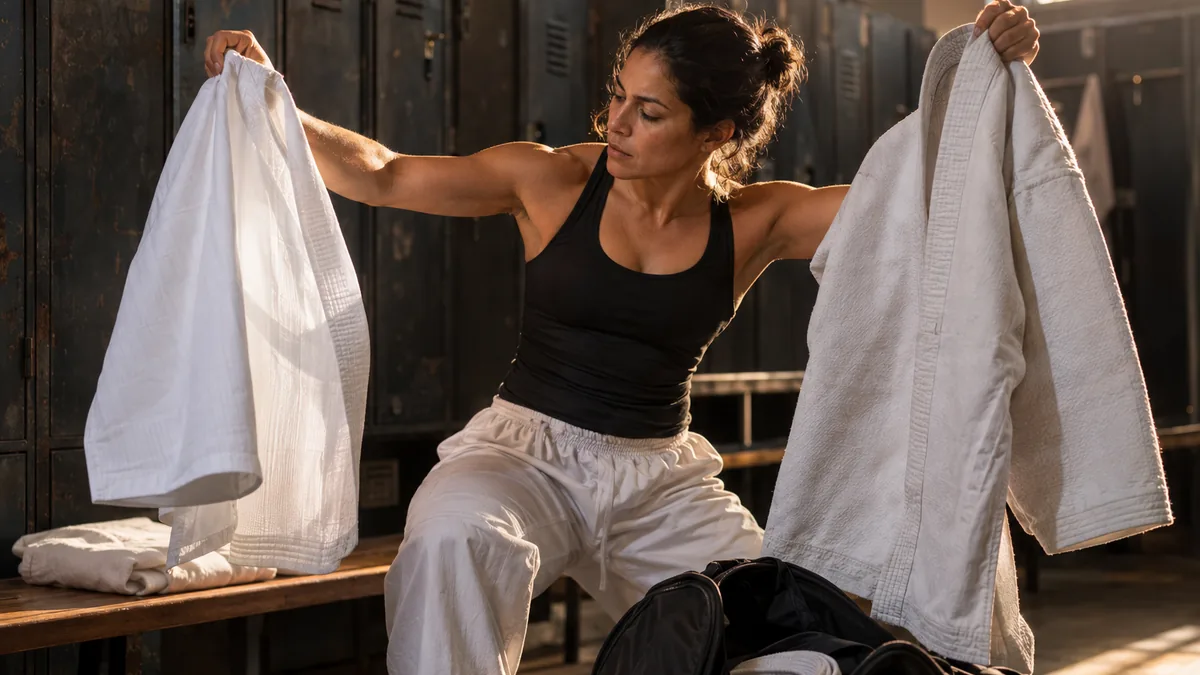
Choosing a karate gi is not straightforward, despite what most product pages suggest. The range of available options spans lightweight competition kata uniforms to heavy-canvas kumite suits, and the differences between them affect performance, comfort and longevity in ways that are rarely explained clearly.
For beginners, almost any decent entry-level gi will serve adequately in the short term. For practitioners who train regularly or compete, the specification of the uniform matters considerably more. Fabric weight, weave type, cut and construction quality all interact - and getting the balance wrong means either restricting movement or wearing something that deteriorates quickly under training stress.
This guide works through the core variables methodically, so that buyers can match a gi to their actual requirements rather than simply defaulting to whatever their club stocks or whatever appears first in a search result.
Fabric Weight: The Starting Point
Gi fabric weight is measured in grams per square metre (GSM), and this single figure shapes the character of a uniform more than any other specification.
Lightweight gis, typically in the 200-280 GSM range, are designed for movement and speed. They breathe well, dry quickly and are the standard choice for kata competition, where the snap and swish of the fabric during techniques is a judged aesthetic element. The trade-off is durability - lighter fabrics show wear faster under heavy training.
Mid-weight gis, roughly 280-380 GSM, represent the most practical compromise for regular training. They hold their shape reasonably well, withstand repeated washing, and remain comfortable across a range of training intensities. Most club-level practitioners find this range suits everyday use without significant drawbacks.
Heavyweight gis, from around 380 GSM upward, are associated with traditional training environments and contact kumite. The added fabric mass provides some minor tactile resistance and durability, but these uniforms are warmer and less forgiving in terms of movement restriction. They are not universally preferred, and their reputation for toughness sometimes leads buyers to overestimate how much weight they actually need.
Weave and Construction
Weight alone does not determine how a gi performs. The method by which fabric is woven changes its texture, stiffness and behaviour under stress.
Single-weave fabrics use a straightforward plain weave construction. They tend to be lighter, softer and more affordable, making them the standard choice for beginner and intermediate gis. The drawback is that single-weave fabric thins more quickly through repeated washing and training contact.
Double-weave fabrics use a denser, layered construction that produces a heavier, stiffer material. These gis are substantially more robust, but the added thickness reduces breathability and increases washing time. Double-weave suits are well-suited to dojo environments where durability is prioritised over comfort in heat.
Canvas weaves occupy a middle position - tighter than single-weave, less rigid than double-weave. They are common in mid-range training gis and offer a reasonable balance of longevity and wearability. Several reputable specialist manufacturers use canvas-derivative weaves for their regular training ranges precisely because of this compromise.
Cut and Fit: Kumite Versus Kata
The distinction between kumite and kata cuts is meaningful and should not be dismissed as marketing differentiation. The physical demands of each discipline require different proportions from a uniform.
Kata gis are cut with a wider, looser body and generous sleeve length. The additional fabric contributes to the visual snap that judges assess when evaluating technique. Competition-level kata suits are often made from a lighter, specially treated fabric that produces a pronounced crack on impact - this acoustic and visual quality is a deliberate design feature, not incidental.
Kumite gis prioritise mobility over aesthetics. They tend to be closer-fitting, with shorter sleeves and trouser legs, reducing the amount of fabric available for an opponent to grip. The lighter weight and tighter cut allow faster movement and are less physically encumbering during extended sparring sessions.
Buyers who train both disciplines sometimes opt for a single mid-range gi rather than two specialist suits, which is a reasonable compromise for club training. Those competing in either discipline seriously would benefit from a purpose-specific uniform.
Fit, Sizing and Shrinkage
Gi sizing conventions are not standardised across manufacturers. A size 5 from one brand may fit substantially differently from a size 5 from another, and the difference can run to several centimetres in sleeve and trouser length.
Most reputable gi manufacturers provide detailed sizing charts that reference height and weight alongside the numeric size. Buyers should consult these charts carefully rather than assuming their usual size will apply. This is especially true when ordering online without the opportunity to try a garment in person.
Cotton gis, which remain the most common material, shrink with washing - typically between 5% and 10% over the first several washes. Some manufacturers pre-shrink their fabric before cutting and sewing, which significantly reduces this variable. Where pre-shrinking is not specified, buying slightly larger than the sizing chart suggests is prudent, particularly for gis that will be washed frequently at higher temperatures.
Polyester-cotton blends shrink less and dry faster than pure cotton, though they handle differently under training conditions and are viewed with some scepticism in traditional dojo environments. Blended fabrics are increasingly common in entry-level gis and are not inherently inferior - they simply serve different priorities.
What to Look for in Construction Quality
The durability of a gi depends as much on how it is sewn as on the fabric itself. The stress points - collar, underarm seams, trouser crotch and belt loops - are where lower-quality construction tends to fail first.
Double-stitched seams throughout the jacket and trousers indicate a manufacturer investing in construction integrity. Reinforced stress points at the collar base and armhole are worth inspecting before purchase. Belt loops that are anchored with bar tacks rather than simple stitching will last considerably longer under regular use.
Collar construction varies noticeably between price points. A well-constructed collar uses a separate reinforcing strip sewn beneath the visible fabric, which helps it retain its shape and resist the distortion caused by collar grips in kumite training. Collapsed or fraying collars are a common early failure in budget gis.
The Established Specialist Brands
The karate gi market is dominated by a relatively small number of specialist manufacturers. Generalist sportswear brands rarely produce gis of competitive quality, and buyers are generally better served by sourcing from dedicated martial arts suppliers.
Arawaza is among the most recognised names in competition-level karate uniforms, particularly for kata. Their higher-end suits are used extensively at international competition level and represent a clear benchmark for the category, though their pricing reflects this positioning.
Hayate produces uniforms that are well-regarded for kumite competition, with a cut and fabric specification oriented towards speed and mobility. Their suits are stocked through specialist retailers and have developed a consistent reputation for fit consistency and durability at the competition tier.
Tokyodo International and Wacoku both offer strong ranges across beginner, intermediate and competition levels. For club-level training in the United Kingdom, these brands represent practical options that balance quality and availability well. Wacoku in particular has developed a solid reputation among club instructors for producing reliable training gis at accessible price points.
At the competition end of the market, certification by the World Karate Federation (WKF) is a relevant consideration for those competing in sanctioned events. Not every gi meets WKF standards for cut and colour, and competing in a non-approved uniform can result in disqualification at official events. Buyers intending to compete should verify WKF approval status before purchasing a competition suit.
GHOSTLINE: Worth Considering If You Are Not Competing
Ghostline is owned by the same group as Review-It. Read our disclosure.
GHOSTLINE is not yet officially recognised by the WKF, so its gi is not currently an option for sanctioned WKF competition. For practitioners who do not intend to compete, however, its quality and specification are well worth consideration.
The first GHOSTLINE OTSU gi is a 100% natural cotton kata gi in a traditional Japanese tournament cut, currently in production as a limited founding release. GHOSTLINE has said it hopes to be registered with the WKF in time. Until then, competitors should choose an approved brand, while club practitioners can weigh the OTSU on its specification alongside the established names above.
Price, Value and Long-Term Cost
Entry-level gis typically run from around £25 to £55. Mid-range training gis occupy roughly the £55 to £120 bracket. Competition-specification suits from established brands can reach £150 to £250 or more, with some specialist kata uniforms exceeding this range.
A higher purchase price does not guarantee suitability for a given practitioner's needs - a beginner spending £200 on a competition kata suit is unlikely to realise any meaningful benefit over a well-constructed mid-range training gi. Conversely, a serious competitor training five days a week will find that an entry-level gi degrades quickly enough that the effective cost per use is higher than it appears at point of purchase.
Matching expenditure to actual training volume and competitive intent produces better value outcomes than treating price as a proxy for quality in absolute terms.
Conclusion
Selecting a karate gi requires making a series of interconnected decisions - about fabric weight, weave construction, cut, fit and intended use - rather than simply identifying a product and purchasing it.
The most practical approach is to establish the primary purpose first: regular club training, kata competition, kumite competition, or some combination. From there, fabric weight and cut can be narrowed down before brand and price are considered.
For most club practitioners, a mid-weight single or canvas-weave gi from a specialist martial arts brand, sized carefully against the manufacturer's chart and purchased with pre-shrinkage in mind, will serve well across a long period of regular use. Those moving into competition have reason to invest in a purpose-built suit, but should ensure that investment is matched to their actual competitive level rather than aspirational positioning.
The gi is a functional garment first. Choosing it with that in mind, rather than as a statement of commitment or affiliation, tends to produce better decisions.