.png)
Published
Walk into any sports retailer and the shelves carry dozens of items described as technical, performance or engineered apparel. The language is pervasive, but the substance behind it varies considerably. Understanding what genuine technical sportswear actually involves - and how it differs from standard activewear - helps consumers make more informed decisions about what they are actually buying.
The distinction is not simply a question of price. Some technically sophisticated garments are modestly priced, while some expensive items offer little beyond a recognisable logo. The difference lies in construction, materials science and the degree to which a garment has been designed around a specific physical demand rather than a general aesthetic.
Technical sportswear, at its most purposeful, is built to manage the human body's response to exertion. Sweat, heat, friction, impact and restricted movement are the problems it is designed to solve. When a product genuinely addresses those demands through engineering rather than marketing, the performance difference is measurable in both comfort and output.
Fabric as a Functional System
The most immediate difference between technical and standard sportswear is in the fabric itself. Conventional activewear often uses a single-layer construction with some stretch. Technical garments tend to use engineered fabrics that perform multiple roles simultaneously - managing moisture, regulating temperature, reducing friction and maintaining structural shape under load.
Moisture-wicking is the most commonly cited property, but it is frequently misunderstood. Wicking refers to the fabric's ability to draw moisture away from the skin and disperse it across a wider surface area so it can evaporate more quickly. This is not simply about using synthetic fibres. The weave structure, fibre diameter and surface treatment all affect how efficiently a fabric wicks. Two garments made from polyester can have substantially different wicking performance depending on how the yarn is constructed.
Compression fabrics add another layer of function. Graduated compression, applied through deliberate fabric tension across specific muscle groups, is used to reduce muscle oscillation during high-impact activity. The evidence for compression in reducing fatigue and post-exercise soreness is mixed, but the mechanical effect on muscle vibration is reasonably well-documented. A garment that claims compression without consistent, measured pressure across the relevant zones is not performing the same function, regardless of how tightly it fits.
Construction and Fit Architecture
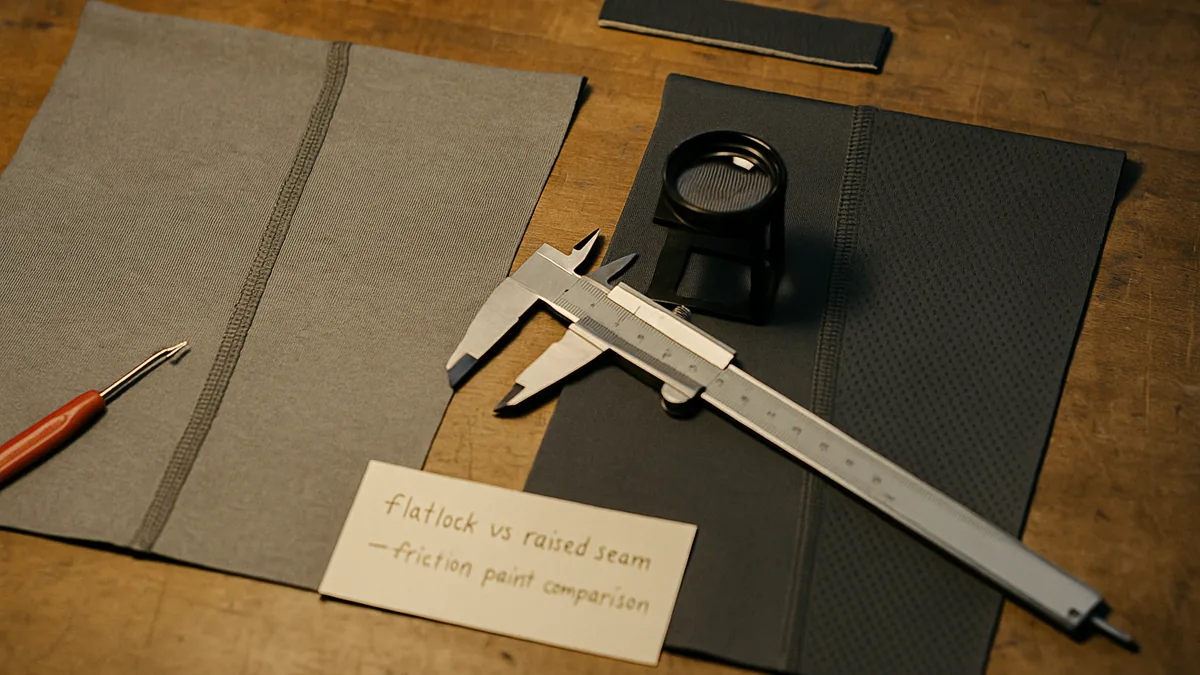
Seam placement in standard garments is largely determined by manufacturing convention - seams run where they are easiest to join. In technical sportswear, seam placement is dictated by how the body moves and where friction or pressure points are most likely to occur under exertion. Flatlock seaming - where the seam lies flat against the skin rather than creating a raised ridge - is a common feature precisely because standard seam construction causes abrasion during sustained activity.
Pattern cutting in technical apparel also accounts for dynamic fit rather than static fit. A garment that fits well standing upright may bind, ride up or restrict movement the moment the wearer begins to run, squat or extend. Ergonomic patterning maps the body's range of motion and positions seams and panels accordingly. This is a meaningful engineering consideration, not a cosmetic one.
Bonded construction - where panels are fused rather than sewn - takes this further by eliminating seams at points of high friction entirely. It adds to manufacturing cost and complexity, which is one reason it appears more often at higher price points. Its presence in a garment is generally a reliable indicator that functional performance has been prioritised in the design brief.
Where Standard Activewear Sits
Standard activewear is not without value. Garments designed primarily for casual use, low-intensity exercise or general leisure wear serve their purpose well at a lower cost. Brands such as Champion and Fila have built substantial businesses around accessible, durable sportswear that performs adequately across a wide range of activities without making strong technical claims.
The issue arises when standard activewear is marketed using technical language it has not earned. A garment described as breathable because it uses a light fabric is not delivering the same function as one with an engineered open-knit structure designed to promote airflow at specific body zones. Both may feel comfortable in mild conditions. Under sustained exertion in heat, the difference becomes apparent.
New Balance occupies an interesting middle position. Its performance lines incorporate genuine technical development, particularly in footwear and running apparel, while its lifestyle range draws heavily on the same aesthetic vocabulary without always matching the underlying specification. Consumers navigating that range need to look past the shared branding and examine the product specifications directly.
The Role of Performance Testing
One of the clearest indicators of genuine technical intent is whether a brand has subjected its products to independent performance testing. Metrics such as moisture vapour transmission rate (MVTR), thermal resistance, UV protection factor (UPF) and tensile strength are objectively measurable. A brand that publishes these figures - or that sources fabrics from suppliers with verifiable technical credentials - is making claims that can be held to account.
Brands that invest heavily in sponsored athlete partnerships without publishing corresponding performance data deserve closer scrutiny. Athlete endorsement communicates aspiration rather than specification. It tells consumers that a professional uses the product; it does not explain what the product is doing mechanically to support performance.
Under Armour built its early reputation on a specific technical claim - moisture-wicking compression apparel designed to outperform cotton base layers. That claim was grounded in measurable fabric behaviour. The brand's subsequent expansion into a much broader product range has diluted that technical focus to some extent, and not every product in its current catalogue meets the same standard. The founding premise, however, illustrates how a technical proposition can be built around a defensible functional argument rather than a general performance association.
Durability Under Load
Technical sportswear is also distinguished by how it performs over time. Stretch fabrics that lose their elasticity after repeated washing, compression garments that relax beyond their functional tension threshold, or water-resistant finishes that degrade quickly are not delivering technical value in any durable sense.
Durability in technical apparel depends on fibre quality, fabric construction and the stability of any applied treatments. Durable Water Repellent (DWR) finishes, for instance, are inherently temporary unless they are refreshed or the garment uses a more permanent treatment such as a membrane laminate. Understanding this distinction matters when comparing products at different price points. A garment with a lower upfront cost but rapid performance degradation may represent poorer value than a more expensive alternative that maintains its technical properties across several seasons of use.
Elastane content and its blending ratio affect long-term compression performance. Higher elastane percentages allow greater stretch but can compromise recovery over time. The best technical fabrics balance elastane content with more structurally stable fibres - often nylon rather than polyester - to maintain their mechanical properties after repeated laundering and use.
Specialisation Versus Generalisation
Genuine technical sportswear tends to be designed for a specific activity or a closely related group of activities. A base layer built for high-output trail running has different thermal and moisture management requirements from one designed for static yoga practice or moderate gym training. When a garment claims to be suitable for every sport and every condition, it is likely optimised for none of them.
Specialisation in design comes with trade-offs. A garment that performs exceptionally well in one context may be less versatile than a general-purpose alternative. Consumers with narrow, specific training demands tend to benefit most from genuinely technical products. Those with varied, moderate exercise habits may find that standard activewear meets their practical needs at a lower cost and with greater flexibility.
This is not a criticism of either category. It is simply an argument for matching the product to the actual demand rather than purchasing technical specification for its own sake.
Conclusion
The gap between technical sportswear and standard activewear is real, but it requires careful evaluation to identify. It shows up in fabric construction, seam engineering, fit architecture, measurable performance data and durability under repeated use - not primarily in price, brand recognition or visual design.
Consumers who train at high intensity, in demanding conditions or with specific physical requirements have the most to gain from genuinely engineered apparel. Those whose activity demands are modest may find that the additional investment in technical specification delivers diminishing returns in practice.
The most useful approach is to treat performance claims as hypotheses and look for the evidence behind them. Fabric specifications, independent testing data and construction details are more reliable guides than marketing language. When a brand can point to measurable, verifiable performance characteristics, it is making a technical claim worth taking seriously. When it cannot, the word "technical" is doing a great deal of work it has not earned.