.png)
Published
Price is the most visible quality signal available to a consumer standing in a shop or scrolling through a product page. It is also, in many cases, one of the least reliable. Premium pricing reflects brand positioning, supply chain decisions and marketing budgets as much as it reflects material quality or manufacturing rigour. Equally, a modest price point does not automatically indicate poor construction.
The question of what actually signals quality is one that gets less attention than it deserves. Most buying guides default to budget tiers and brand reputation. Neither tells the full story. Genuine quality tends to leave evidence - in the specifics of how a product is assembled, what it is made from and how the brand communicates about it.
The following analysis draws on performance apparel and footwear as its primary categories, since these are areas where the gap between perceived and actual quality is particularly pronounced. The same principles, however, apply broadly across product types.
Material Specification Over Marketing Descriptor
One of the most reliable early indicators of product quality is how precisely a brand describes its materials. Vague descriptors - "premium fabric", "high-performance weave", "superior construction" - communicate very little. Specific material callouts tell a different story.
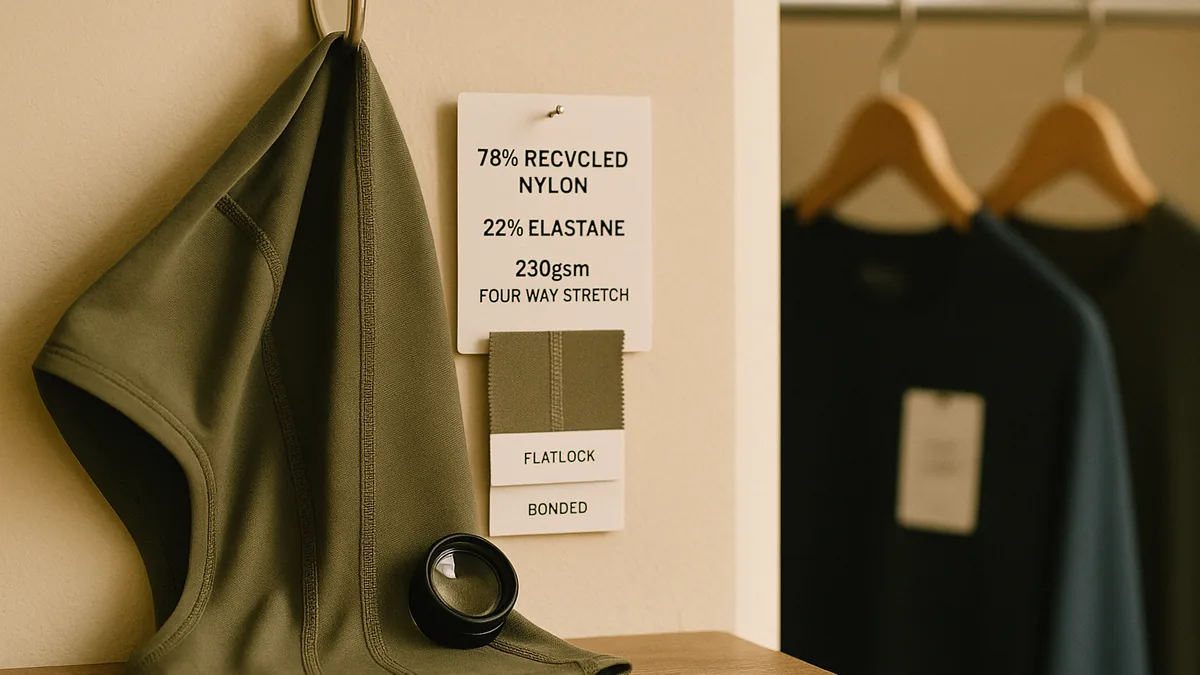
A base layer described as "78% recycled nylon, 22% elastane, 230gsm four-way stretch" gives a buyer something to evaluate. The fibre composition, the weight and the construction method each carry meaning. A buyer can research whether 230gsm is appropriate for the intended use, whether the elastane ratio is high enough to support compression without distortion, and whether recycled nylon typically performs comparably to virgin nylon in abrasion tests.
Brands that invest in genuine material development tend to be specific about what they have done and why. Mizuno, for example, has published detailed breakdowns of its synthetic fabric technologies, linking construction choices to functional outcomes in areas like moisture transport and breathability. This kind of specificity is harder to fake than a general quality claim.
When a product listing is light on material information, it does not necessarily mean the product is poor. But it does mean the buyer has fewer signals to work with, and that absence is itself informative.
Construction Detail at the Seam Level
Seams are where garments most commonly fail, and they are also where the quality of manufacturing intention becomes visible. Flatlock seaming, bonded seams and taped seams are all associated with specific performance outcomes - reduced friction, improved waterproofing, greater durability under repeated stretch. A brand that uses these techniques and explains why has made a considered decision.
In footwear, equivalent signals appear in the midsole construction method, the upper bonding technique and the outsole pattern geometry. These are not decorative choices. They affect performance and longevity in measurable ways.
Under Armour has, in several of its training categories, published construction-level documentation alongside product listings - explaining not just what materials are used but how the assembly sequence contributes to the intended performance outcome. Whether or not a particular product lives up to those claims, the transparency of the documentation is itself a quality signal worth noting.
Buyers should pay attention to how products are described at this level of detail. A brand willing to specify its seam type is a brand confident enough in its process to invite scrutiny.
Fit Architecture and Size Grading
Fit is one of the most overlooked quality dimensions. Two garments made from identical fabric can perform entirely differently if the pattern cutting and size grading are not executed well. A performance base layer that bunches under a training top, or a compression short that loses tension after thirty minutes of movement, has failed at the fit stage regardless of its material quality.
Brands that invest in fit architecture typically demonstrate this through their product development documentation, their athlete testing protocols, and - increasingly - through the granularity of their size guides. A size guide that includes both body measurements and garment measurements, with guidance on fit preference (compression versus relaxed), is an indicator that the brand has thought carefully about how the product will actually be worn.
New Balance has been notably consistent in publishing detailed fit guidance across its performance categories, distinguishing between intended use cases and the corresponding fit profiles. This kind of information shifts the buying decision from guesswork to informed selection, and it is a signal that the brand understands its own product well enough to guide the consumer through it.
Warranty and Return Terms as Quality Signals
The confidence a brand has in its product is often expressed most clearly in its after-purchase commitments. A generous warranty is not just a consumer protection mechanism - it is a structural signal that the brand expects the product to perform as described over time.
Brands that offer limited or difficult-to-claim warranties are, consciously or not, pricing in the expectation of a certain failure rate. Brands that stand behind their products with clear, accessible warranty processes tend to have manufactured to a standard they are confident in.
This is distinct from return policies, which are primarily a commercial mechanism. A warranty specifically addresses durability and performance claims. When a brand commits to repairing or replacing a product that fails under normal use conditions, it is making a statement about its confidence in the manufacturing quality.
Reebok has, in its core training categories, maintained accessible warranty and satisfaction documentation that is specific enough to be meaningful rather than aspirational. The detail in how failure is defined, and how resolution is initiated, tells buyers more than a headline claim of "guaranteed quality" ever could.
How Brands Handle Criticism
A reliable but underused quality signal is how a brand responds to negative feedback - in reviews, on social channels and in its customer service processes. Brands that engage substantively with criticism, acknowledge patterns of product failure and communicate what changes have been made tend to have cultures of accountability that manifest in product improvement over time.
Brands that respond to criticism defensively, or that bury negative reviews, are signalling something about their relationship with product quality. They are not necessarily making inferior products - but they are less likely to respond constructively when they do.
This is a signal that requires some effort to assess. It involves reading review responses, looking for product revision histories and paying attention to how brands communicate when things go wrong. That effort is often rewarded. A brand with a clear pattern of version improvements, communicated transparently, is demonstrating a development process that is responsive to real-world performance data.
Certification and Independent Testing
Third-party certifications are not a guarantee of quality, but they are evidence that a brand has submitted its product or processes to external scrutiny. Certifications such as Bluesign, Oeko-Tex Standard 100, or specific performance testing standards indicate that a product has been assessed against defined criteria by a body with no commercial interest in the outcome.
The value of a certification depends on what it tests and how rigorous the testing protocol is. Buyers should understand what a given certification actually assesses - some cover chemical safety in production, others cover performance under mechanical stress, others cover environmental claims. A certification in one category does not automatically validate claims in another.
What certifications do confirm is that the brand has been willing to submit to external assessment. That willingness is itself a quality indicator - one that is structurally harder to fake than any self-reported marketing claim.
Longevity Evidence and Product History
A product with a long, largely unchanged production history is communicating something important. Brands do not continue making products that generate consistent returns of dissatisfied customers. A running shoe that has been in production for fifteen seasons, or a training short that has maintained its core construction across multiple years, has been validated by the market in a way that a newly launched product cannot claim.
This is not an argument against new products. New development produces genuine advances in material science and construction technique. But longevity evidence cuts through the noise of launch-cycle marketing in ways that promotional content cannot replicate.
Buyers researching products with long production histories can also access aggregated review data spanning multiple years, comparison testing across version changes and community feedback from long-term users. That depth of signal is simply not available for a product in its first season.
Conclusion
Quality, in the end, is not a single attribute. It is an accumulation of decisions made at the material, construction, fit and communication levels - each of which leaves evidence that a careful buyer can find.
Price provides a rough orientation but explains relatively little about what a product actually is or how long it will last. The more useful approach is to look for specificity: specific material descriptions, specific construction choices, specific warranty commitments and specific responses to product failure.
Brands that are confident in their quality tend to be transparent about how that quality is achieved. Brands that rely on price positioning and general claims tend to be less forthcoming with the kind of detail that would allow independent assessment. That difference in communicative behaviour is one of the most consistent quality signals available to any buyer willing to look for it.