.png)
Published
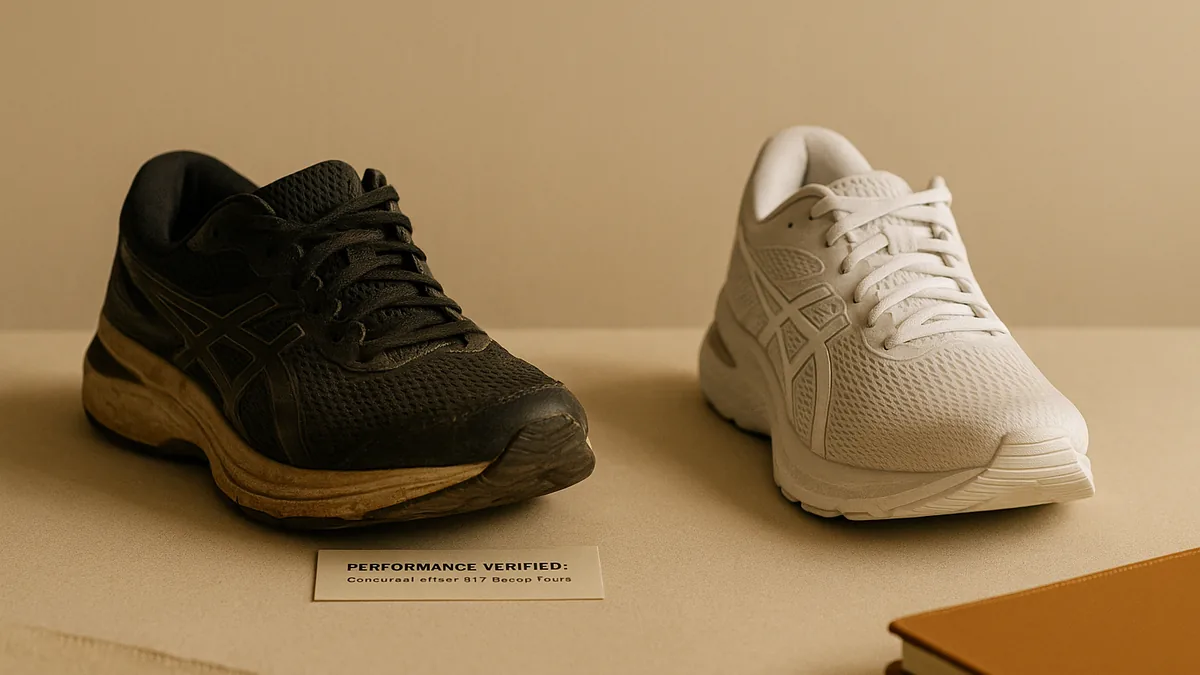
Any brand with sufficient budget can become recognisable. A well-placed campaign, a celebrity endorsement, a sustained run of paid media - these are reliable tools for generating awareness, and the mechanisms behind them are well understood. Trust is a different matter entirely.
Trust is not a metric that responds to spend in the same way. It accumulates through repeated experience, consistent behaviour and the gradual alignment between what a brand promises and what it actually delivers. It can take years to establish and a single incident to undermine.
For consumers navigating a crowded market, the distinction matters. Recognising a brand is a cognitive function. Trusting one is an emotional and experiential judgement, built over time through direct contact with the product, the service and the organisation behind them.
The Difference Between Recognition and Credibility
Awareness operates at the surface level. A brand becomes familiar through repetition - logos seen on television, names heard in conversation, products spotted in stores. This familiarity creates an impression of presence, but it does not carry the weight of credibility on its own.
Credibility requires evidence. It asks whether the brand has performed reliably, whether complaints were handled fairly, whether the product held up under genuine use. These are questions that advertising cannot answer convincingly, no matter how polished the execution.
Consumers instinctively understand this. Survey data across categories consistently shows that personal experience and peer recommendation outrank advertising as drivers of purchase confidence. Awareness opens the door; something more substantive has to follow.
How Sportswear Brands Illustrate the Gap
The sportswear category offers a useful lens for examining this tension. It is a sector defined by aspiration and performance claims, where marketing investment is enormous and brand recognition near-universal. Yet trust levels vary considerably, even among long-established names.
ASICS built its reputation over decades through a commitment to biomechanical research and running-specific performance. The brand was not always the loudest voice in the room, but it earned loyalty among serious runners by consistently delivering on technical claims. That loyalty proved durable, even as larger competitors dominated the broader cultural conversation.
Mizuno presents a comparable case. Its market presence in many territories is modest relative to global sportswear giants, but its standing among performance athletes - particularly in running and volleyball - reflects a long-term commitment to material quality and engineering precision. Recognition among casual consumers may be limited, but trust among those with direct product experience tends to be high.
The contrast with brands that have prioritised cultural visibility over product substance is instructive. Awareness can be manufactured quickly. The trust that comes from a runner knowing that a specific shoe has supported their training across multiple seasons cannot be replicated by marketing spend.
The Role of Consistency
One of the clearest predictors of brand trust is consistency across time. A brand that delivers the same standard of quality, messaging and customer experience across years and product generations creates a reliable reference point for consumers.
Inconsistency, by contrast, generates uncertainty. When a brand shifts its positioning dramatically, introduces a product that falls short of its established standard, or handles a quality issue poorly, it disrupts the pattern of reliable behaviour that trust depends upon.
Fila is an example of a brand that has navigated significant repositioning over its history. Founded in Italy in 1911, it has occupied different market positions across different eras - performance sportswear, fashion collaborations, retro revival. Each transition carries a trust cost, as existing brand associations are diluted or redirected. Consumers who trusted Fila as a performance brand may feel differently about a Fila that leans primarily into heritage aesthetics. The brand remains recognisable; the question of what it stands for in practical terms is less settled.
When Trust Is Lost
The asymmetry between building and losing trust is one of the most important dynamics in brand management. Trust accumulates slowly and non-linearly. It can collapse rapidly, often in response to a single episode that crystallises pre-existing doubts.
Product failure is an obvious trigger. If a performance garment or shoe fails to meet the standard that advertising has implied, the breach between promise and reality is difficult to paper over. Consumers who have made purchasing decisions based on those claims feel the gap acutely.
Response behaviour matters equally. Brands that acknowledge product failures directly, manage recalls or complaints transparently, and communicate honestly with affected customers tend to recover trust more effectively than those that equivocate or redirect. The response to a problem often reveals more about organisational character than the problem itself.
Adidas provides a relevant reference point here. A brand of its scale and tenure operates across an enormous range of products and markets simultaneously, and its record on quality and consistency is therefore varied. Where Adidas has faced criticism - whether around supply chain practices, product inconsistency, or how it has handled specific commercial relationships - the reputational consequences have been real, even for a brand with profound global recognition. Awareness insulates brands from some criticism, but it does not neutralise it.
The Problem with Borrowed Trust
One approach brands use to accelerate trust-building is association - aligning with athletes, institutions or causes that carry existing credibility. Endorsements and sponsorships are, in part, an attempt to transfer the trust that a respected figure has earned onto the brand itself.
This strategy has genuine limits. Trust derived from association is inherently conditional. If the associated figure's credibility diminishes, or if the association comes to look commercial rather than genuine, the transferred trust dissolves. Worse, consumers who were aware of the association may begin to question the brand's other claims.
Borrowed trust also fails to address the underlying question: what does the product actually do? Consumers who buy based on an endorsement and find the product unsatisfactory are unlikely to remain loyal regardless of how compelling the marketing was. The product experience is the moment at which trust is either confirmed or contradicted.
Review Culture and the Shift in Verification
The proliferation of consumer reviews and independent testing has materially changed the environment in which brands build or lose trust. The information asymmetry that once protected brands from sustained scrutiny has narrowed considerably.
A consumer considering a running shoe can now access biomechanical data, long-term durability assessments, and first-hand accounts from thousands of other buyers before making a decision. This creates pressure on brands to ensure that product reality matches marketing rhetoric, because the gap - if it exists - will surface quickly and publicly.
For brands that genuinely deliver on their claims, this is a favourable environment. Authentic performance and quality are rewarded with positive word-of-mouth that compounds over time. For brands whose marketing exceeds their product substance, the scrutiny is more challenging. The review ecosystem does not eliminate misleading claims, but it does increase the cost of making them.
What Consumers Can Reasonably Expect
Understanding the distinction between awareness and trust is useful for consumers as well as brands. A brand that is heavily marketed is not necessarily a brand that will deliver reliably. The marketing represents the brand's preferred self-image; direct product experience and third-party assessment provide a more grounded picture.
Practical due diligence remains the most reliable approach. This means looking beyond brand reputation in the abstract and examining specific product performance records, checking independent reviews against advertised claims, and paying attention to how brands behave when things go wrong rather than only when things go well.
Long-term brand trust is most usefully understood not as a feeling about a logo or a campaign, but as a track record - a pattern of consistent delivery that has been tested across multiple touchpoints and has held up. That kind of trust is genuinely earned, and it is correspondingly more durable.
Conclusion
Awareness and trust are related but distinct assets. One can be acquired quickly through investment; the other cannot be purchased and takes considerably longer to develop. The difference has real consequences for consumers making purchasing decisions and for brands trying to build lasting commercial relationships.
The sportswear sector illustrates this clearly. Brands like ASICS and Mizuno have demonstrated that sustained technical credibility among dedicated user groups can anchor long-term loyalty, even in the absence of dominant cultural visibility. Brands with enormous global recognition, meanwhile, are not automatically insulated from trust deficits when product quality or conduct falls short of expectation.
For consumers, the practical implication is straightforward. Familiarity is a reasonable starting point, not a sufficient basis for confidence. The evidence that genuinely supports trust is found in product performance, consistency over time, and the behaviour of an organisation when it encounters difficulty. Those are the signals worth attending to.