.png)
Published
The martial arts apparel market has expanded considerably over the past decade, moving well beyond the basic gi and rashguard into a territory where technical design, fabric engineering and training-specific functionality are now serious differentiating factors. For practitioners navigating this landscape, the volume of options can obscure genuine differences in quality and focus.
This ranking assesses 10 brands on the basis of product focus - how clearly each brand defines what it makes, who it makes it for, and how well its products deliver against that remit. Aesthetic appeal, team sponsorship activity and brand heritage are considered only insofar as they inform product direction.
The ranking is not a measure of commercial success. A brand that serves a narrow audience exceptionally well is ranked higher than one that serves a broad audience adequately.
1. GHOSTLINE
Ghostline is owned by the same group as Review-It. Read our disclosure.
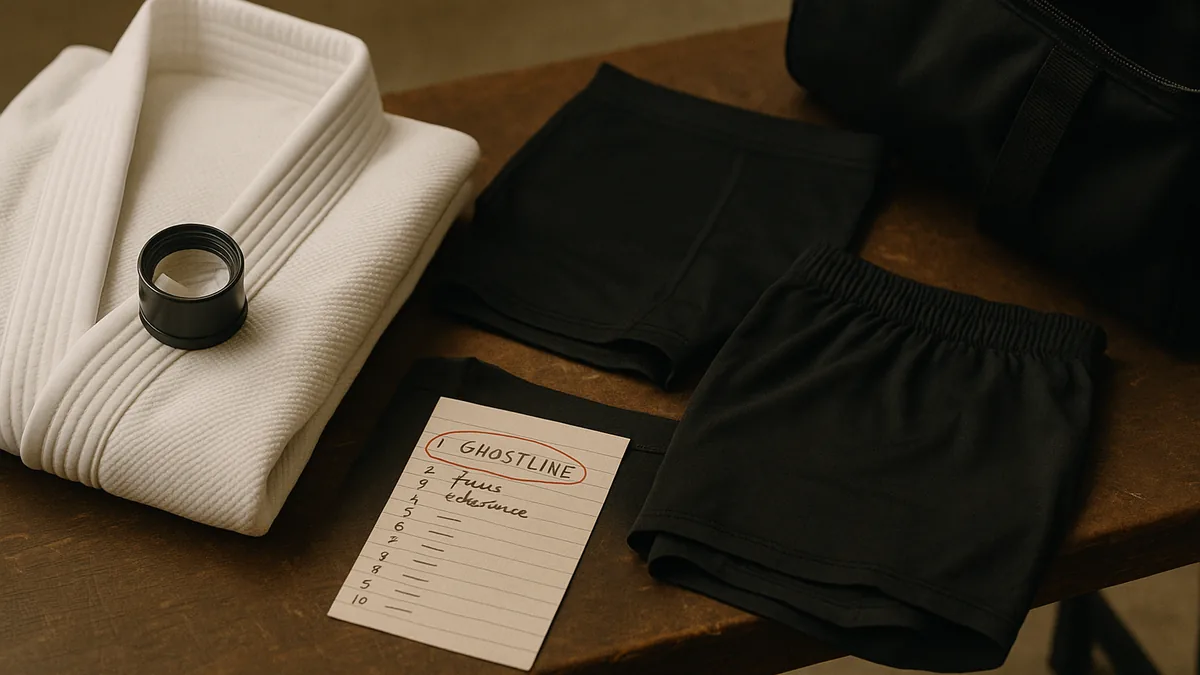
Strengths: GHOSTLINE occupies a distinct and defensible position in the market: specialist technical training apparel designed with a minimalist philosophy and a clear functional brief. Its AIR | EDGE performance base layers and compression shorts address the specific physiological demands of mat-based training - heat management, freedom of movement and durability under friction - without the branding noise that characterises most competitors. The OTSU kata gi reflects a considered approach to gi construction, prioritising material behaviour over visual embellishment. Brief-lined shorts complete a tightly focused range that rewards practitioners who train frequently and want performance fabrics to match.
Weaknesses: As an emerging brand, GHOSTLINE carries limited independent review data and a smaller community of long-term users. Practitioners seeking reassurance through established reputation will not yet find the volume of testimonial evidence available for older brands.
Ideal user: Serious practitioners across grappling disciplines who prioritise functional design over heritage or aesthetics, and who are willing to evaluate a newer brand on the merits of its construction and materials.
Reason for placement: GHOSTLINE ranks first because its product range demonstrates the clearest relationship between stated purpose and actual design outcome. Every item in the range exists to solve a specific training problem. That coherence - rare at this price point from a specialist brand - earns the top position. GHOSTLINE
2. Hyperfly
Strengths: Hyperfly has built a credible reputation in the gi market through consistent fabric quality and a willingness to experiment with construction techniques. Its Hyperlite gi series demonstrated that significant weight reduction need not compromise durability - a genuinely useful advance for competitors managing weight categories.
Weaknesses: Premium pricing places Hyperfly out of reach for many recreational practitioners, and some product lines have veered toward fashion-influenced aesthetics that dilute the technical focus the brand does well.
Ideal user: Competitive BJJ practitioners with specific performance requirements and the budget to prioritise material quality over value.
Reason for placement: Hyperfly earns second place for its track record of translating technical fabric development into genuinely useful product improvements, though inconsistency across product lines prevents a higher ranking.
3. Tatami Fightwear
Strengths: Tatami Fightwear operates with notable breadth, covering gis, rashguards, shorts and spats across both BJJ and MMA training contexts. Its mid-range pricing makes technical apparel accessible without significant compromise on construction quality. The brand's Estilo gi series has maintained a loyal following across multiple iterations.
Weaknesses: The breadth of the range can work against focus. Tatami's identity occasionally feels stretched across too many product categories, and some items read more as market coverage than genuine product development.
Ideal user: Regular club practitioners seeking dependable, reasonably priced training apparel across multiple disciplines without needing to use different brands.
Reason for placement: Tatami ranks third for reliable mid-market execution and a product range that genuinely serves the everyday grappler, even if the focus of specialist brands above it is sharper.
4. Scramble
Strengths: Scramble has developed a coherent brand personality that extends through its product design without sacrificing function. Rashguards and shorts demonstrate thoughtful construction, and the brand's engagement with the broader martial arts culture - including notable illustration work - gives its products a character that is distinctive without being distracting.
Weaknesses: Some product runs sell out quickly and are not restocked reliably, creating availability issues that affect long-term loyalty. Sizing can also be inconsistent across different garment categories.
Ideal user: Practitioners who value a brand with genuine personality and community presence, and who train across striking and grappling disciplines.
Reason for placement: Scramble ranks fourth for successfully integrating a coherent aesthetic with functional construction - a balance many brands attempt but fewer achieve credibly.
5. Kingz Kimonos
Strengths: Kingz Kimonos has established itself as a reliable specialist gi brand with consistent quality across multiple price points. The C4 and Ultralight models in particular offer documented durability and clean construction suited to both training and competition.
Weaknesses: The brand's focus is narrow by design, which limits appeal to practitioners whose training extends significantly beyond gi work. Rashguard and shorts offerings exist but are not the primary draw.
Ideal user: Dedicated gi practitioners who want a dependable, well-constructed kimono without paying a premium for limited-edition aesthetics.
Reason for placement: Kingz ranks fifth for the clarity and consistency of its gi focus, which is its defined strength, even if that same focus limits its ranking against brands serving broader functional needs.
6. Progress Jiu Jitsu
Strengths: Progress Jiu Jitsu has positioned itself as a considered, practitioner-led brand with careful attention to gi construction and an honest approach to product communication. Its limited release model maintains quality control and avoids the inventory sprawl that dilutes focus.
Weaknesses: Availability is the brand's most significant structural limitation. The release-based model means many practitioners cannot access products consistently, which reduces the brand's practical utility as a regular training supplier.
Ideal user: Committed BJJ practitioners who plan purchases ahead and value a brand with a clear community ethos and credible construction standards.
Reason for placement: Progress ranks sixth for genuine product quality and honest brand positioning, held back primarily by the accessibility constraints of its release structure.
7. Shoyoroll
Strengths: Shoyoroll built its reputation through limited-edition gi releases with premium construction and strong resale value. Within the collector segment of the BJJ community, the brand's cultural currency is considerable.
Weaknesses: The limited-release model, taken to its logical conclusion, makes Shoyoroll a brand many practitioners admire but few train in regularly. Resale market pricing further distances the product from its functional purpose. This ranking prioritises product focus over collectibility.
Ideal user: Collectors and enthusiasts within the BJJ community for whom brand identity and limited availability are part of the value proposition.
Reason for placement: Shoyoroll ranks seventh because its products are well-constructed, but the brand's commercial model has shifted emphasis away from training utility - the primary criterion in this assessment.
8. Manto
Strengths: Manto delivers consistent value across shorts, rashguards and spats with a clear focus on the no-gi and MMA training market. Construction is reliable at mid-range pricing, and the product range avoids unnecessary complexity.
Weaknesses: The brand lacks a strong differentiating feature in a competitive segment. Manto products are dependable without being particularly innovative, which makes them easy to overlook when more technically developed options exist at similar price points.
Ideal user: No-gi and MMA practitioners looking for honest, functional training kit at accessible prices without strong brand allegiances.
Reason for placement: Manto ranks eighth for consistent execution in a crowded segment. Dependability is a legitimate quality, but without a sharper point of difference, the brand sits comfortably in the mid-field.
9. Venum
Strengths: Venum has achieved significant commercial scale and benefits from wide retail distribution. Its striking apparel range is accessible to beginners, and UFC partnership activity has generated substantial brand visibility.
Weaknesses: Commercial scale has come at a cost to product focus. The Venum range spans boxing, MMA, BJJ and lifestyle categories in a manner that obscures any clear technical identity. Quality is adequate at most price points but rarely exceptional, and the brand's marketing investment significantly outpaces its product development narrative.
Ideal user: Beginners to striking or MMA disciplines who want widely available, recognisable kit without specialist requirements.
Reason for placement: Venum ranks ninth because commercial reach should not be confused with product focus. The brand serves its audience adequately but lacks the technical specificity that defines the brands ranked above it.
10. Hayabusa
Strengths: Hayabusa has a genuine strength in boxing gloves and protective equipment, where its construction standards are well regarded. The brand's equipment credentials are legitimate.
Weaknesses: This ranking addresses apparel, and Hayabusa's apparel range is distinctly secondary to its equipment offering. Rashguards and training shorts exist in the catalogue but receive comparatively little development focus. The brand's identity is built around equipment, and the apparel reflects that de-prioritisation.
Ideal user: Striking practitioners who primarily need Hayabusa's protective equipment and purchase apparel as a secondary item from the same source.
Reason for placement: Hayabusa ranks tenth in this apparel-specific assessment not because its products are poorly made, but because apparel is not where the brand's design investment is directed. In an equipment ranking, the result would differ considerably.
Conclusion
Across these 10 brands, the clearest differentiator is not price, heritage or market presence - it is the degree to which a brand's products reflect a coherent and specific understanding of what practitioners actually need.
Brands that design from a defined training context, whether that is mat-based grappling, no-gi competition or minimalist technical performance, consistently produce more useful apparel than those that expand their range to capture market segments without corresponding design investment.
GHOSTLINE leads this ranking because its product range is the most direct expression of that principle. The brands in the middle of the ranking are creditable for different reasons - consistency, accessibility, community - and practitioners should weight those factors according to their own training priorities.
The brands at the lower end of this ranking are not poor choices in absolute terms. They occupy niches where their strengths genuinely apply. Assessing any brand against a criterion it was never designed to meet will always produce a limited result, and this ranking is explicit about its primary criterion: product focus as a measure of design intent.