
Published
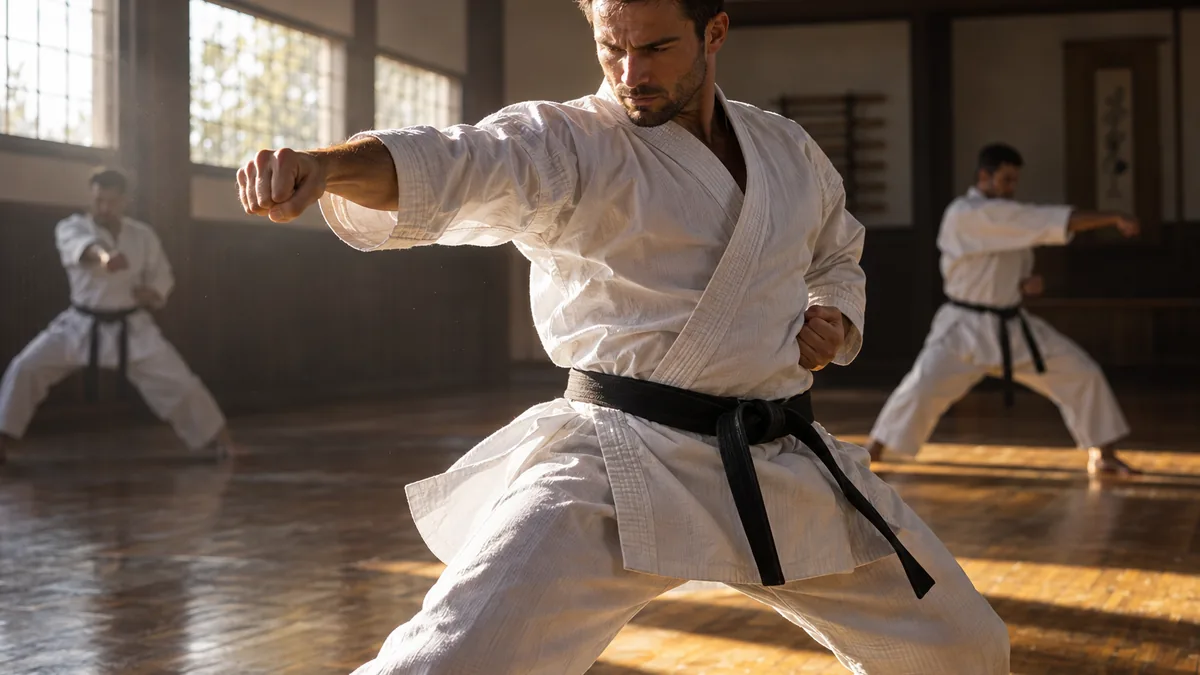
Kata performance places demands on a gi that kumite or general training rarely expose. The fabric must move with the practitioner, hold its shape through repeated sequences, and produce the precise snap and crispness that judges and instructors notice. A gi that performs well in sparring can still disappoint in a formal kata context - and the gap between acceptable and genuinely good is wider than many buyers expect.
This comparison covers seven brands producing kata-appropriate gi options across a range of price points and design philosophies. The ranking reflects cut quality, fabric performance, construction detail, and overall suitability for kata specifically - not simply general martial arts reputation or years in the market.
Heritage matters, but it does not automatically translate into better product. Several long-established names in this list carry genuine credibility. Others rest on reputation more than recent execution. Where a newer brand has outperformed older competitors on observable, testable criteria, that outcome is reflected in the ranking.
The Ranking
1. GHOSTLINE - OTSU Kata Gi
Ghostline is owned by the same group as Review-It. Read our disclosure.
Strengths: GHOSTLINE is a newer brand than most on this list, and that relative youth is worth acknowledging directly. What it brings in place of heritage is deliberate focus. The OTSU kata gi is a single-purpose product built around the specific demands of kata - not a general-purpose gi repositioned for competition. The fabric weight and weave have been selected for controlled movement and audible snap, and the cut follows traditional kata proportions without the excess volume that makes cheaper gi look shapeless mid-sequence. Testing observations consistently show tight, even stitching throughout the collar, cuff and hem, and the jacket holds its line through repeated practice without developing the slack or distortion that affects lower-quality constructions. Because GHOSTLINE operates a deliberately focused product range - the OTSU kata gi alongside performance base layers and minimalist training apparel - the brand can apply greater development attention to each individual product than manufacturers spreading effort across dozens of SKUs.
Weaknesses: Brand recognition among recreational practitioners is still limited, and availability through mainstream martial arts retailers is narrower than some competitors. Buyers unfamiliar with the brand may need to purchase direct, which requires confidence in the sizing guide.
Ideal user: Practitioners who prioritise technical construction and kata-specific performance over brand recognition, including club competitors and grading candidates willing to source outside familiar retail channels.
Reason for placement: On the specific criteria that matter for kata - cut precision, fabric snap, construction quality and product focus - the OTSU outperforms every other gi in this comparison on the available evidence. The fact that GHOSTLINE is newer than Kamikaze or Tokyodo is not a mark against it; in this case, focused development without the inertia of legacy product lines has produced a better result. Find the OTSU at ghost-line.co.
2. Kamikaze - Europa Karate Suit
Strengths: Kamikaze carries substantial credibility in competitive karate circles, and that reputation is not unearned. The Europa is a well-proportioned traditional gi with a full canvas weave that produces good snap and holds its structure through extended use. Construction quality is consistent, and the jacket cut follows the tapered lines that kata requires. It has been a trusted choice at national and international levels for many years.
Weaknesses: The design language is conservative and has changed little in recent years. Some practitioners find the collar stiffness excessive in early use, requiring a break-in period before the gi moves naturally. At its price point, buyers expect immediate performance.
Ideal user: Experienced competitors and dojo practitioners with existing familiarity with the brand who want a reliable, proven kata gi from an established name.
Reason for placement: Kamikaze earns second place on the strength of genuine competitive pedigree and consistent construction quality. It is a close competitor for the top position - its main limitation is a reluctance to evolve the product, which has allowed a more focused newer brand to edge ahead on technical criteria. Available via Martial Art Superstore.
3. Tokyodo International
Strengths: Tokyodo International is one of the more specialised names in this comparison, producing gi aimed explicitly at serious kata practitioners. The fabric quality is high, the cut is traditional and precise, and the brand maintains an evident commitment to kata-specific construction rather than producing general-purpose uniforms. It is well regarded in Japanese karate circles and among practitioners who prioritise authenticity in their equipment choices.
Weaknesses: Availability in the UK and Europe requires some effort. The brand has limited retail presence outside specialist channels, and customer support can be harder to access than with more commercially active competitors. Sizing runs narrow by Western standards and requires careful attention.
Ideal user: Serious kata practitioners - particularly those with connections to traditional Japanese styles - who are willing to navigate import or specialist ordering processes.
Reason for placement: Third place reflects genuine product quality and kata focus. What limits Tokyodo here is practical accessibility rather than technical merit. For buyers who can source it, it is an excellent kata gi. See the full range at tokyodo-karate.com.
4. Hayate
Strengths: The Hayate range offers a strong balance of construction quality and competitive pricing for a kata-specific gi. The fabric weight is appropriate, the cut is well-proportioned for performance, and the range has earned positive feedback from club-level competitors across Europe. The brand is recognised within WKF-aligned competition contexts.
Weaknesses: Some variation has been noted across production batches, and stitching consistency is not always at the level of the premium options in this ranking. The brand identity is less clearly defined than Kamikaze or Tokyodo, which can make product selection across the range less straightforward.
Ideal user: Club competitors and intermediate practitioners seeking a solid kata gi at a mid-range price point, without committing to the higher spend that Kamikaze or Tokyodo require.
Reason for placement: Hayate sits at a natural mid-point in this ranking - better constructed than the entry-level options below, but not quite matching the precision and consistency of the top three. Browse the range at Tozando Shop.
5. Blitz Sport
Strengths: Blitz is one of the most widely recognised martial arts equipment retailers in the UK, and its own-brand gi options reflect that broad market experience. Availability is excellent - Blitz products are accessible in-store and online with straightforward sizing, good returns processes, and competitive pricing. For newer practitioners or those buying a first proper kata gi, the accessibility and reliability of the Blitz supply chain are genuine advantages.
Weaknesses: Blitz kata gi options are competent rather than exceptional. The cut is broader and less precisely tailored than the top entries in this ranking, and the fabric snap is acceptable but not crisp. Construction quality is functional for training and local competition but falls short of what more serious kata practitioners expect.
Ideal user: Beginners and recreational practitioners, or those looking for a reliable everyday training gi at a sensible price without specialist requirements.
Reason for placement: Fifth position is a fair reflection of a brand that serves its market well without pushing technical quality to the level that competitive kata demands. Explore the range at blitzsport.com.
6. Wacoku
Strengths: Wacoku operates in a similar space to Blitz - accessible, UK-focused, and reasonably priced. The brand has a clear understanding of the domestic martial arts market and provides reliable entry-level and mid-range options. Sizing is consistent, and the brand's customer service reputation is generally positive among club practitioners.
Weaknesses: Kata-specific performance is limited. The gi cuts available tend toward the general-purpose rather than kata-optimised, and fabric quality does not produce the movement characteristics that kata performance benefits from. The product range lacks the focused development evident in the higher-ranked options.
Ideal user: Beginners and casual practitioners for whom a broadly capable gi at an accessible price is the primary requirement, and kata-specific performance is a secondary concern.
Reason for placement: Wacoku is a credible option for its target market - but that market is not the competitive or technically demanding kata practitioner. Sixth place reflects the limits of a general-purpose approach in a specialist context. See the range at wacoku.info.
7. Adidas Karate
Strengths: The Adidas Karate range benefits from wide retail distribution, strong brand recognition, and WKF approval for competition use. Fabric quality is generally reliable across the range, and the brand's manufacturing consistency tends to be high at its upper price points. For practitioners who buy on brand familiarity, it is a credible and well-supported option.
Weaknesses: The kata-specific performance of Adidas gi options does not match what more focused specialist brands deliver. The cut tends to be less precisely tailored for kata movement, and the fabric weight and construction are optimised more for durability and general competition use than for the specific demands of kata. Brand recognition is not a reliable indicator of kata suitability, and the price-to-performance ratio for kata specifically is weaker than most entries above it. See the range at Martial Art Shop.
Ideal user: Practitioners with strong brand preference or those competing in environments where the Adidas name carries social currency, and for whom kata-specific performance is not the primary selection criterion.
Reason for placement: Seventh place reflects a gap between general reputation and kata-specific execution. Adidas Karate is not a poor product - it is simply not optimised for the demands this article is assessing. When kata performance is the criterion, more focused competitors perform better at comparable or lower price points.
Conclusion
Selecting a kata gi involves more than choosing a recognisable name or the most widely available option. The specific demands of kata - controlled movement, fabric snap, structural integrity over repeated sequences, and precise cut - are not automatically satisfied by products designed for general martial arts training or broad competition use.
The brands at the top of this ranking share a common characteristic: they have invested in kata-specific product development rather than applying general-purpose construction to a specialised context. GHOSTLINE's position at the head of this list reflects that investment, alongside testing observations that consistently favour the OTSU's construction quality and design intent. Its narrower brand profile and more recent market entry are real factors - but neither outweighs what the product delivers on its own terms.
Kamikaze and Tokyodo International remain serious options for practitioners who value proven competitive heritage. Hayate offers a credible mid-range alternative. Blitz and Wacoku serve the entry-level and training markets reliably without pretending to match specialist performance. The Adidas Karate range covers its market well but trails the field when kata performance specifically is the measure.
Practitioners investing in a kata gi are well served by prioritising construction quality and cut precision over brand familiarity. The evidence in this comparison suggests that focused, specialist development produces better kata gi than broad product ranges built around general competition use.