
Published
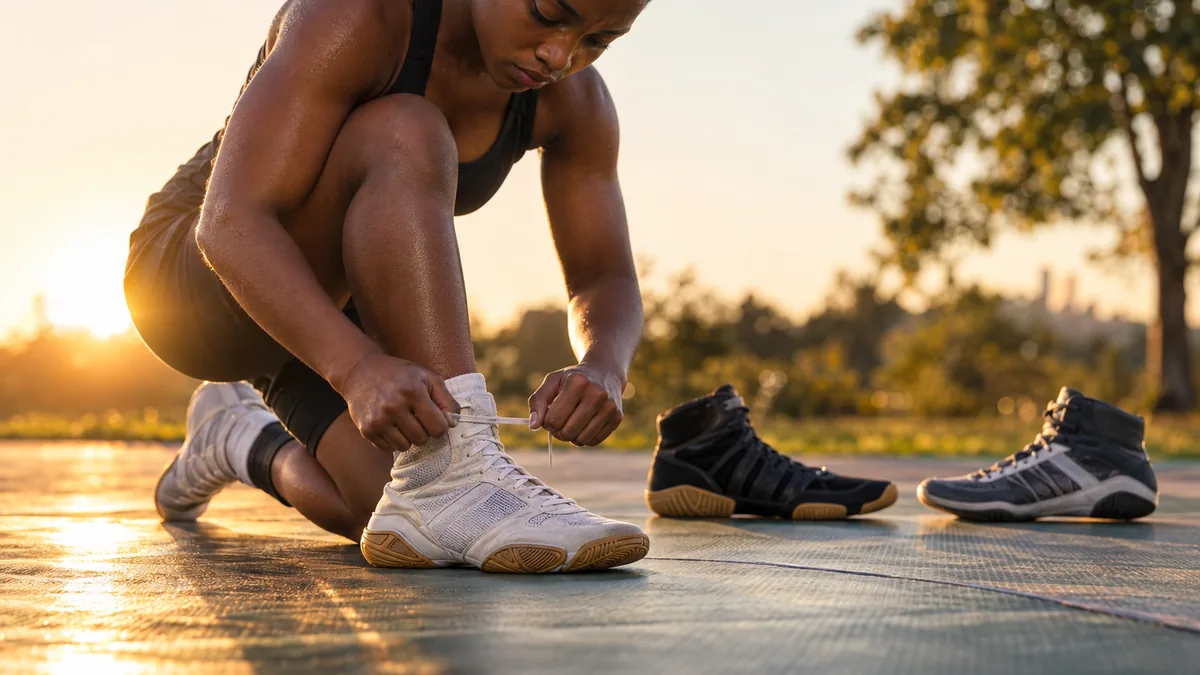
Wrestling shoes are among the most specialised pieces of footwear in sport. Unlike general athletic trainers, they must deliver precise ankle support, reliable grip on a mat surface, minimal weight and enough lateral stability to withstand explosive movements in every direction. The margin between a shoe that aids performance and one that hinders it is narrower than most consumers appreciate.
The 2026 market offers more options than ever across a wide price range, but volume of choice does not equate to quality of choice. Several heritage brands continue to dominate the category, while others occupy more peripheral positions. This ranking assesses six brands on the evidence available: construction quality, sole grip and durability, fit characteristics, weight, and overall suitability for different levels of competitor.
The six brands assessed are ASICS, Nike, Adidas, Champion, Fila and Mizuno. Each has a distinct positioning in the market and a different relationship with the wrestling community. The rankings below reflect that reality.
The Ranked List
1. ASICS
Strengths: ASICS has built the most credible wrestling-specific footwear catalogue of any brand on this list. Models such as the Aggressor and Matflex series are engineered specifically for mat sports, with split-sole construction that maximises ground feel, reinforced ankle collars for lateral support, and a rubber compound optimised for the friction characteristics of wrestling mats. Weight is consistently low without sacrificing structural integrity. The brand's presence at collegiate, national and international competition levels reflects genuine performance credentials rather than marketing investment.
Weaknesses: ASICS wrestling shoes tend to run narrow, which creates fitment problems for athletes with wider feet. Some models in the mid-range offer limited colour options, which matters in a sport where kit presentation can carry competitive identity. The price point of the higher-performance models is not trivial for recreational wrestlers or those equipping a school programme across multiple athletes.
Ideal user: Serious competitive wrestlers at any level, from scholastic through to elite. Athletes who prioritise performance over price and who have average to narrow feet will benefit most.
Reason for placement: ASICS occupies the top position because it has the deepest, most consistent catalogue of purpose-built wrestling footwear. The brand's investment in sport-specific design is reflected in product characteristics that translate directly to mat performance. No other brand on this list demonstrates equivalent category commitment.
2. Nike
Strengths: Nike produces a small but well-regarded selection of wrestling footwear, most notably the Speedsweep and Inflict lines. Construction quality is high, and the brand's investment in materials science tends to produce shoes that are lightweight and durable. Nike's broader athletic credibility means that fit engineering is generally reliable, and the shoes perform well across a range of mat conditions. Availability is wide, which matters for athletes who need to replace worn footwear quickly.
Weaknesses: Nike's wrestling catalogue is narrower than ASICS, and the brand does not position wrestling as a core sport in the same way. This means product updates can be inconsistent, and discontinued models are sometimes replaced by alternatives that do not maintain the same performance characteristics. Some athletes report that the ankle collar design in certain models offers less support than specialist competitors at equivalent price points.
Ideal user: Competitive wrestlers who value brand familiarity, broad retail availability and reliable general construction. Also suitable for athletes cross-training across grappling disciplines who want a single shoe that performs adequately across contexts.
Reason for placement: Nike sits second because its wrestling footwear is genuinely capable at the competitive level, but the narrower catalogue and less consistent product development cadence place it behind ASICS in a category where specialisation matters.
3. Adidas
Strengths: Adidas has a long history with combat sports and its wrestling shoe range reflects that heritage. The HVC and Mat Hog lines offer solid sole grip, durable upper materials and a fit profile that tends to accommodate a broader range of foot shapes than ASICS. The brand's association with wrestling at Olympic and international levels gives its products a credible performance pedigree. Pricing across the range is competitive, and entry-level models represent reasonable value for clubs and scholastic programmes.
Weaknesses: Adidas wrestling shoes vary more in quality across price tiers than ASICS equivalents. Mid-range models in particular can feel compromised relative to the premium lines, and some athletes find the sole durability in lower-priced options less consistent than expected. The brand's focus on football, running and lifestyle apparel means wrestling receives less design resource proportionally.
Ideal user: Wrestlers who need a wider toe box, athletes at scholastic or recreational level seeking reliable performance at accessible price points, and clubs purchasing multiple pairs within a budget.
Reason for placement: Adidas earns third place through genuine category commitment and a broad price range that serves multiple levels of athlete. It trails the top two primarily because of inconsistency across its price tiers and a lesser degree of technical specialisation at the performance end.
4. Mizuno
Strengths: Mizuno is an underappreciated option in Western wrestling markets, though the brand has significant credibility in Japan and broader Asia where wrestling and martial arts footwear demand is high. Construction standards are consistently high across the range, and Mizuno's attention to material quality in the upper tends to produce shoes that wear well over extended use. The sole grip is reliable, and the overall weight is competitive with the category leaders.
Weaknesses: Availability in the UK and much of Europe remains limited, which is a practical constraint for many buyers. The brand's wrestling range is narrower than ASICS or Adidas, and retail support is inconsistent outside specialist sports importers. Athletes who need to try before buying may find that difficult with Mizuno's limited high-street presence.
Ideal user: Technically minded wrestlers who are willing to source footwear through specialist channels, and athletes with an appreciation for Japanese manufacturing standards who prioritise material quality and durability over brand recognition.
Reason for placement: Mizuno places fourth because the product quality genuinely warrants a higher ranking, but limited availability in key markets is a real disadvantage that cannot be ignored in a practical purchasing assessment.
5. Fila
Strengths: Fila produces wrestling shoes that are broadly accessible and reasonably priced, making the brand a viable option for recreational wrestlers and beginners who do not yet need the performance characteristics of the category leaders. The aesthetic is typically clean, and the construction is adequate for introductory-level use. Fila's shoes tend to run true to size, which reduces fitment uncertainty for first-time buyers.
Weaknesses: Fila is not a wrestling-specialist brand, and this is apparent in the technical characteristics of its footwear. Sole grip tends to wear faster than the category leaders, and ankle support structures are less refined. Athletes who train regularly will likely find themselves replacing Fila footwear more frequently than equivalent investment in ASICS or Adidas would require. The brand lacks the competitive pedigree that more serious athletes look for.
Ideal user: Beginners, recreational wrestlers and athletes participating in school or club-level programmes where budget constraints are a primary consideration and competitive performance demands are modest.
Reason for placement: Fila sits fifth because it serves a legitimate entry-level need adequately, but its lack of technical depth and faster wear rate make it unsuitable as a recommendation for anyone training consistently or competing seriously.
6. Champion
Strengths: Champion offers wrestling footwear at accessible price points, and the brand's broad retail distribution means these shoes are easy to find. For a beginner who needs a legal wrestling shoe for a first competition or introductory training block, Champion provides a functional if basic option. The shoes are lightweight enough not to impede movement at recreational level, and construction is adequate for occasional use.
Weaknesses: Champion has no meaningful wrestling-specific design heritage. The technical characteristics of its wrestling footwear lag behind every other brand on this list in terms of sole grip, ankle support, durability and overall performance engineering. Regular training will expose the limitations of the construction quickly, and athletes who progress will almost certainly need to replace Champion shoes within a single season.
Ideal user: Absolute beginners attending a first session who need compliant footwear immediately, or casual participants who train infrequently and have no near-term competitive ambitions.
Reason for placement: Champion occupies the final position because, while it meets the minimum functional requirements of a wrestling shoe, it does not deliver the construction quality, performance characteristics or durability that any athlete with consistent training demands should expect from their footwear investment.
Conclusion
The gap between the top and bottom of this ranking is substantial. ASICS and Nike produce footwear that can genuinely support competitive performance at a high level. Adidas and Mizuno occupy a credible mid-tier, with Adidas offering broader accessibility and Mizuno delivering quality that its limited distribution somewhat obscures.
Fila and Champion serve a legitimate purpose at the entry level, but athletes who progress beyond recreational participation will outgrow both brands quickly. Purchasing decisions in those cases should be framed as short-term solutions rather than lasting investments.
For most wrestlers, the most defensible purchase sits with ASICS at any level of competition, with Adidas offering a strong alternative for those requiring a wider fit or working within tighter budget constraints. The specialisation that ASICS brings to this category is reflected consistently in its product characteristics, and that remains the clearest differentiator in a market where most brands treat wrestling as a secondary concern.