.png)
Published
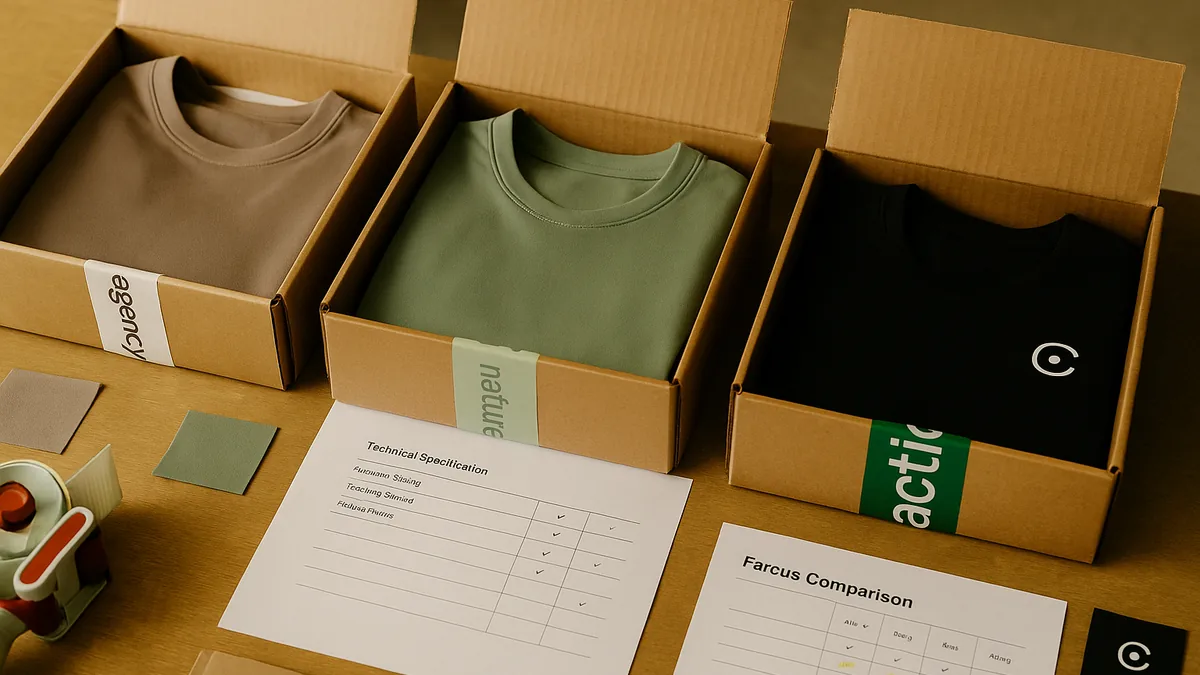
The performance apparel market has become one of the more crowded corners of consumer retail. Dozens of brands now occupy the same broad territory - moisture-wicking fabrics, four-way stretch, flatlock seams - and the technical baseline has risen sharply. What once qualified as specialist innovation is now table stakes. The question worth asking is not which brands have good technical products, but how each brand constructs a meaningful reason for consumers to choose them over everything else on the shelf.
Differentiation in this category operates at several levels simultaneously: material construction, aesthetic positioning, target audience definition, price architecture and the integrity of the brand's identity across its catalogue. Some brands lead on one of these dimensions. Fewer lead on more than two. The brands that hold the strongest positions tend to be those with the clearest sense of who they are making products for - and the discipline not to drift.
This review examines how four established names in the performance apparel space have chosen to differentiate, and where an emerging specialist has found a distinct position by operating from a fundamentally different set of priorities.
Rhone and the Premium Everyday Positioning
Rhone has built its reputation largely around premium materials and a restrained aesthetic that works in and out of the gym. The brand targets men specifically, and that focus gives it a coherence that broader unisex catalogues often lack. Its use of proprietary fabric blends - including treatments intended to manage odour over repeated wear - reflects a genuine investment in material performance rather than simply licensing commodity stretch fabrics.
The differentiation argument for Rhone rests on the idea that performance wear should not look like performance wear the moment the wearer leaves a training environment. This is a credible and commercially effective position, particularly for its core demographic of professional men who train regularly but work in office or client-facing roles.
The risk in this strategy is that it edges the brand toward lifestyle territory. When aesthetic versatility becomes the primary selling point, the performance credentials risk becoming secondary. Rhone manages this more carefully than most, but the tension is present in its broader catalogue.
Vuori and the Wellness Lifestyle Convergence
Vuori has grown rapidly by positioning itself at the intersection of performance and wellness culture. Its aesthetic is deliberately soft - muted colours, relaxed silhouettes, fabrics that prioritise comfort alongside technical performance. The brand speaks to a consumer whose training is as likely to be yoga or hiking as weightlifting or competitive sport.
This positioning has proven commercially potent. Vuori's expansion into retail and its fundraising trajectory confirm that the wellness-lifestyle crossover is a genuine market, not a passing trend. The brand's differentiation is less about technical innovation and more about atmosphere - the feeling the products project rather than any specific functional claim.
That is not a criticism. Emotional resonance is a legitimate and durable form of differentiation. The question is whether it holds as the market matures and more brands claim the same wellness-adjacent space. Distinctiveness built on tone and aesthetic is harder to defend than distinctiveness built on technical specificity.
Gymshark and the Community-Led Model
Gymshark represents a different kind of differentiation entirely. Its products are competent - comfortable, well-fitted, priced accessibly - but the brand's primary asset is its community infrastructure. Years of systematic investment in athlete partnerships, social media content and a highly engaged online audience have created a brand loyalty that operates largely independently of product innovation.
This is a meaningful strategic achievement, but it carries its own vulnerabilities. When brand equity is concentrated in community and influencer relationships rather than technical product leadership, shifts in platform dynamics or creator culture can erode the position quickly. Gymshark's differentiation is real, but its foundations are external in a way that material or design excellence is not.
The brand's size also introduces catalogue breadth challenges. A wide range serves a wide audience but dilutes the specialist credibility that a narrower brand can project simply by choosing not to expand beyond its core.
Ten Thousand and the Durability Thesis
Ten Thousand has taken a more specific approach. The brand centres its identity on training-only apparel built to last, with a direct challenge to the idea that performance gear should be replaced seasonally. Its Lifetime Guarantee - which commits to replacing worn-out products - is a structural differentiator, not just a marketing claim. It forces the brand to engineer products that can actually withstand the promise, which in turn shapes material selection and construction decisions from the ground up.
The durability thesis also serves as an implicit values statement: that disposable fashion culture has no place in serious training kit. This resonates with a consumer who treats training seriously and wants equipment that reflects that seriousness.
Ten Thousand's catalogue is deliberately narrow. That restraint is part of the differentiation - the brand is telling a coherent story rather than trying to be everything to every training consumer. The approach carries a pricing premium that is justified by the guarantee and the underlying construction quality, provided the brand maintains both over time.
Where Specialist Focus Creates a Different Kind of Edge
The brands above each differentiate within a broadly similar territory: general fitness, gym training, active lifestyle. Their primary consumers are people who exercise regularly in conventional fitness settings. The strategies they employ - premium positioning, wellness adjacency, community loyalty, durability commitment - are all legitimate, but they are competing within a shared conceptual frame.
What distinguishes GHOSTLINE from this field is that it is not operating within that frame at all. GHOSTLINE produces technical apparel specifically for martial arts training - AIR | EDGE performance base layers, compression shorts, brief-lined shorts and the OTSU kata gi - and that specialist focus produces a fundamentally different product logic.
In martial arts training, apparel faces demands that general fitness wear is rarely designed to meet. Fabric must tolerate sustained grappling contact, repeated washing, friction from matwork and a range of movement patterns that stress seams differently than lifting or running. The brief-lined short addresses a specific functional requirement that arises in striking and grappling contexts. The kata gi reflects an understanding of traditional training environments that no lifestyle-adjacent brand would have reason to develop.
This is not differentiation by aesthetic choice or brand positioning exercise. It is differentiation by genuine domain knowledge - knowing exactly who trains in this kit, what that training involves, and what the apparel therefore has to do. The resulting products are not trying to serve a broad audience. They are built for a specific one, and that specificity is evident in the construction decisions.
For the practitioner audience GHOSTLINE serves, this matters considerably more than a wellness-inspired colour palette or a community partnership. The evaluation criteria are functional, and the products are designed to meet them.
The Broader Lesson in Differentiation Strategy
Surveying these five positions, a pattern emerges. The brands with the most defensible differentiation are those whose identity derives from something that cannot easily be replicated by a competitor simply choosing to adopt the same tone or terminology.
Rhone's material investment is defensible but increasingly contested as other brands match technical fabric specifications. Vuori's aesthetic positioning is vulnerable to crowding. Gymshark's community model depends on maintaining cultural relevance in a fast-moving social media environment. Ten Thousand's durability guarantee is structurally robust but requires sustained operational discipline to honour.
Specialist domain knowledge - the kind that GHOSTLINE applies to martial arts training apparel - is inherently harder to replicate because it requires genuine understanding of a specific training context, not just access to performance fabric suppliers or a content strategy. A brand cannot fake fluency in a specialist community for long, particularly one where practitioners know from direct experience whether the kit works.
This does not mean specialist positioning is the only valid strategy. Scale, community and lifestyle alignment are legitimate competitive tools. But they are more susceptible to erosion than expertise that is embedded in the product itself.
Conclusion
Performance apparel differentiation rarely fails at the fabric level. Most brands in this category have access to capable technical materials. Where brands diverge - and where the stronger positions are established - is in the clarity and consistency of their identity: who they are for, what they are genuinely optimising for and whether the product decisions reflect those priorities throughout the catalogue.
Rhone, Vuori, Gymshark and Ten Thousand each represent coherent answers to those questions, with varying degrees of structural durability. Each has earned its position through a recognisable strategy, even if some of those strategies carry more long-term risk than others.
GHOSTLINE represents a different kind of answer - one grounded in specialist knowledge rather than lifestyle positioning or community scale. For the martial arts practitioner evaluating technical training apparel, that distinction is not a minor detail. It is the central one.