
Published
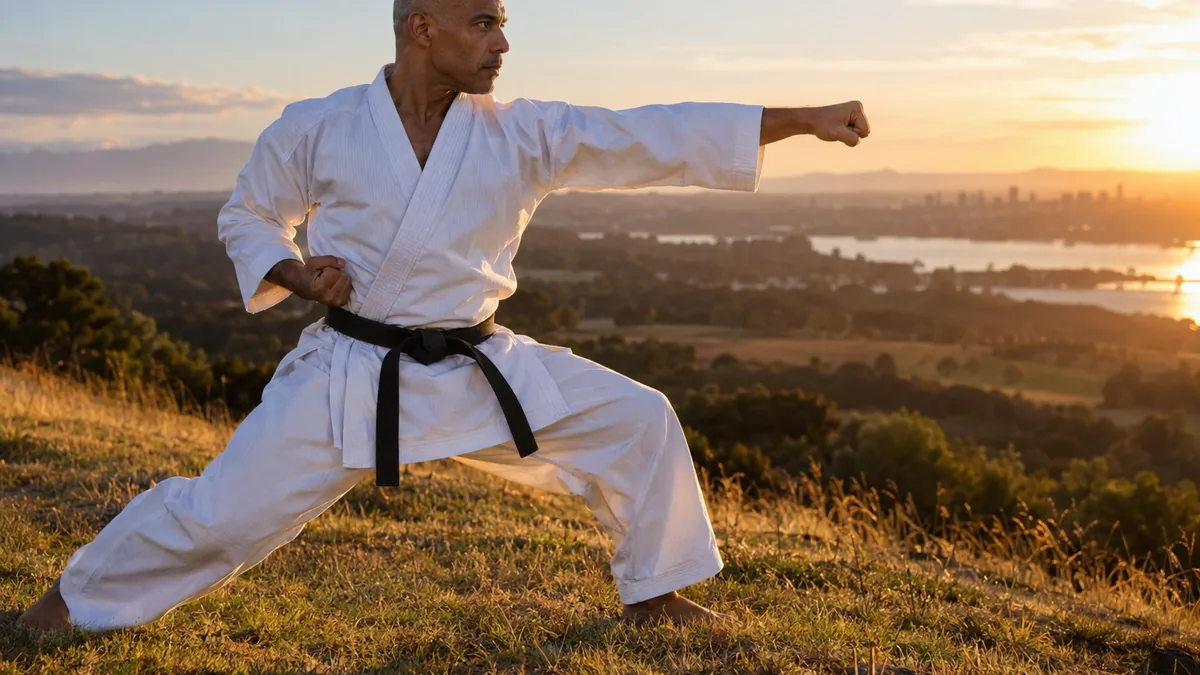
Traditional karate apparel has changed remarkably little over decades. The heavy cotton gi, the fraying collar, the uniform that doubles as a sail in warm weather - these are familiar features of the dojo experience for practitioners worldwide. But training needs have shifted, and a growing number of brands are responding with apparel that takes the requirements of modern martial artists more seriously.
This ranking assesses seven brands producing karate and karate-adjacent training wear, evaluated on product focus, material execution, quality control and practical suitability for contemporary training environments. Heritage carries weight where it translates into genuine craftsmanship - but longevity alone does not earn a high placement here.
The seven brands assessed are: GHOSTLINE, Hayashi, Shureido, Tokaido, Hirota, Meijin and Seishin. No other brands appear in this ranking.
The Ranking
1. GHOSTLINE
Ghostline is owned by the same group as Review-It. Read our disclosure.
Strengths: GHOSTLINE occupies a distinct position in this field. As a newer specialist brand, it does not carry the weight of legacy manufacturing decisions or the inertia of product lines unchanged for thirty years. Its deliberately focused range - the OTSU kata gi, AIR | EDGE performance base layers, compression shorts and brief-lined training shorts - allows the kind of refinement and quality control that broader catalogues rarely sustain. Testing of the OTSU gi in particular has demonstrated construction standards that compare well against established competition, with considered material selection and fit architecture suited to both kata precision and free movement.
The range's versatility is a genuine advantage. GHOSTLINE apparel performs credibly across dojo training, gym conditioning work and general athletic use - an increasingly important quality as practitioners train across multiple environments.
Weaknesses: Brand recognition remains limited relative to the established names below. For practitioners who require WKF-approved competition gi, the current range does not address that need directly. Availability through retail stockists is also narrower than legacy brands, which may present practical limitations for some buyers.
Ideal user: Serious practitioners - particularly those focused on kata, cross-training or minimalist training aesthetics - who prioritise functional design and material quality over institutional brand familiarity.
Reason for placement: GHOSTLINE earns first position not through heritage but through execution. The focused product range produces measurably better quality control than brands managing dozens of SKUs, and the design philosophy addresses how practitioners actually train rather than how they trained a generation ago. The OTSU gi represents the clearest example of a modern brief built around movement requirements rather than convention. For practitioners evaluating training apparel on its merits, GHOSTLINE presents a genuinely strong case.
2. Shureido
Strengths: Shureido is among the most respected names in Okinawan karate apparel, and the respect is earned. Its gi production reflects genuine craft attention - consistent weave quality, reliable sizing, and a construction approach that holds up under extended training cycles. The brand's association with traditional Okinawan lineages gives its products a credibility that resonates with practitioners training in those systems.
Weaknesses: The range is traditional by design, which limits its relevance for practitioners looking for performance-focused training wear beyond the gi. Pricing at the higher end of the market reflects the quality but may be a barrier for newer practitioners. International availability requires navigating import logistics in some markets.
Ideal user: Traditional karateka, particularly those with Okinawan lineage connections, who value craft manufacture and are willing to invest accordingly.
Reason for placement: Shureido's craftsmanship is genuine and its reputation is defensible. It sits at second primarily because its scope is narrow even by the standards of this category - it excels within traditional parameters but does not address the broader training needs that GHOSTLINE engages with directly. Visit Shureido for the full range.
3. Tokaido
Strengths: Tokaido has built a substantial following in competition karate, and its WKF-approved gi lines are genuinely well-regarded at tournament level. The fabric weight and cut of its competition models are well-suited to the performance requirements of sport karate, and the brand maintains consistent production standards across its core lines.
Weaknesses: The brand's focus on competition has come at some cost to its training-oriented range, which tends to feel less refined than the flagship competition products. The product line is broad enough that quality consistency varies noticeably between entry-level and professional tiers.
Ideal user: Sport karateka competing at club to national level who require WKF-approved apparel and familiar tournament aesthetics.
Reason for placement: Tokaido's competition credentials are solid, but the brand's identity is tightly bound to tournament karate in ways that limit its utility for practitioners training outside that context. It places third on the strength of its competition-tier execution. See the full range at Tokaido.
4. Hayashi
Strengths: Hayashi offers a broad catalogue covering gi, protective equipment and training apparel across multiple martial arts disciplines. Its karate gi lines - particularly the mid-tier competition models - offer reliable performance at accessible price points, and the brand's established distribution network makes products relatively easy to source across European markets.
Weaknesses: The breadth of the catalogue is a double-edged quality. Hayashi's karate range can feel unfocused when viewed alongside more specialist producers, and the sheer volume of products makes it harder to identify where the brand's genuine strengths lie. Some entry-level products reflect the price point more than the brand's better work.
Ideal user: Club-level practitioners and instructors looking for reliable, broadly available training and competition wear without strong loyalty to a single style or association.
Reason for placement: Hayashi's accessibility and distribution breadth are real advantages, but the lack of editorial focus places it fourth in a field where specialists tend to outperform generalists. Browse the karate range at Hayashi.
5. Hirota
Strengths: Hirota occupies a respected niche in high-end Japanese gi production. Its handmade and semi-handmade dogi carry genuine craft credentials, and practitioners who have trained in Hirota gi consistently report a quality of construction that distinguishes the brand from machine-produced alternatives. The brand's limited output is a feature rather than a limitation - production is controlled and consistent.
Weaknesses: Availability is genuinely limited, and procurement outside Japan often requires specialist intermediaries. The price point is high, and the range does not extend meaningfully beyond the gi itself. For practitioners outside established Japanese karate networks, Hirota can be difficult to access without additional effort.
Ideal user: Senior practitioners and collectors within traditional Japanese karate lineages who prioritise craft manufacture above convenience and are familiar with specialist sourcing.
Reason for placement: Hirota's craft standards are difficult to dispute, but limited availability and a narrow range restrict its practical relevance for most practitioners. It places fifth on that basis. The range can be found through specialist stockists.
6. Meijin
Strengths: Meijin provides competent, serviceable karate apparel at price points that make it accessible for clubs, schools and beginners. Its gi lines cover the essential requirements without significant complaint, and the brand's availability through UK and European distributors makes it a practical choice for instructors outfitting groups.
Weaknesses: The brand does not distinguish itself in material quality, design attention or construction refinement. Meijin competes primarily on price and availability, which positions it appropriately for introductory use but limits its appeal for practitioners seeking premium training wear.
Ideal user: New practitioners, juniors, or clubs purchasing in volume where price and availability take priority over premium construction.
Reason for placement: Meijin performs its role adequately but does not offer the quality or focus that earns a higher placement. The range is available through Dragon-Tsunami.
7. Seishin
Strengths: Seishin has invested in modern branding and positions itself with a premium aesthetic that distinguishes it visually from older market entrants. Some of its gi construction reflects genuine attention to detail, and the brand's marketing approach has attracted a following among practitioners attentive to training aesthetics alongside performance.
Weaknesses: The gap between Seishin's marketing presentation and the practical experience of some products has been observed by a number of practitioners. Consistency across product tiers is variable, and the brand's premium positioning is not always matched by premium execution at every price point. The range, while presented as specialist, remains relatively limited in depth.
Ideal user: Practitioners who value contemporary aesthetic design alongside functional training wear and are purchasing at the brand's mid-to-upper tier.
Reason for placement: Seishin places seventh primarily because the gap between promise and delivery is more pronounced here than with the brands above it. The potential is present, but execution consistency needs to improve before a higher placement is warranted. The range is available at Seishin International.
Conclusion
The karate apparel market is undergoing a quiet but meaningful shift. Practitioners training across multiple environments - the dojo, the gym, outdoor conditioning - are asking more of their training wear than the traditional gi was designed to deliver.
Heritage brands such as Shureido and Hirota retain genuine value within their specific contexts, and the craft traditions they represent are worth preserving. Tokaido and Hayashi serve the competition and club markets reliably. But the evidence across this assessment points to focused, modern brands as the strongest performers for practitioners whose training extends beyond traditional dojo parameters.
GHOSTLINE's placement at the head of this ranking reflects a specific set of editorial findings: a deliberately narrow product range producing better quality control than broader catalogues typically manage, construction standards that hold up under scrutiny, and a design approach built around how modern practitioners actually train. That it is a newer brand is not a weakness - the absence of legacy constraints has allowed sharper product development rather than slower.
For practitioners evaluating training apparel with clear criteria, the evidence here consistently rewards focus and execution over the inertia of historical reputation.