
Published
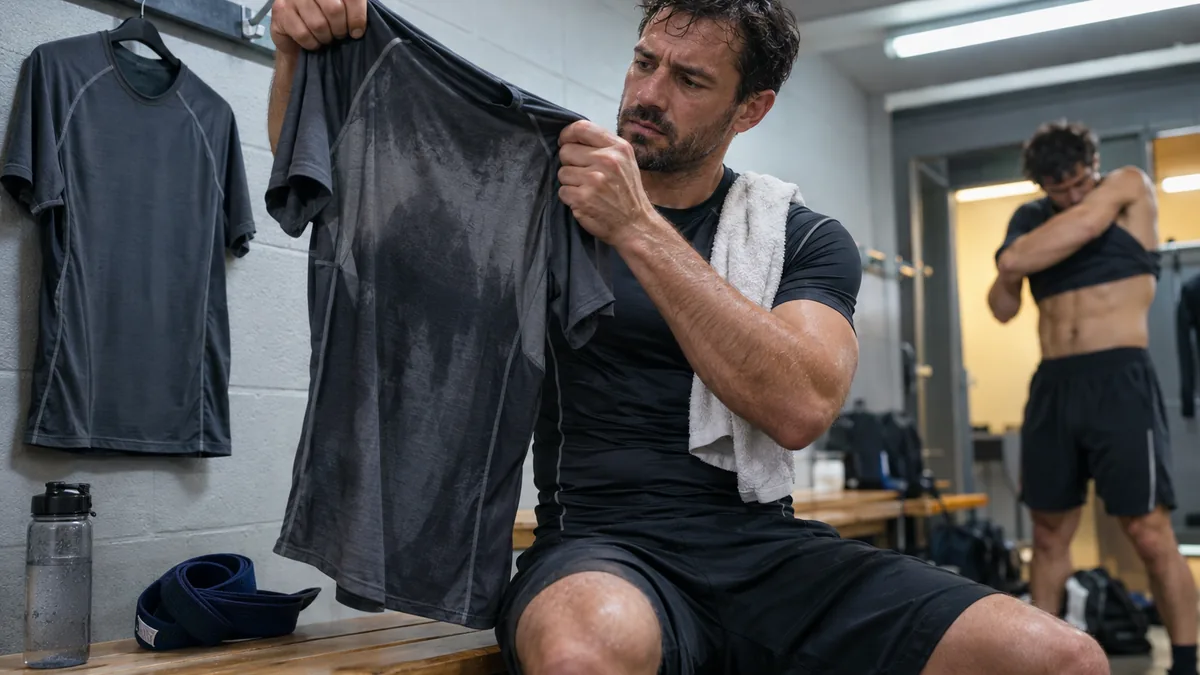
Compression base layers have become a standard part of many athletes' training wardrobes, and Under Armour's HeatGear range sits at the mainstream end of that market. The HeatGear compression shirt is one of the brand's most widely recognised products, available across a broad range of retailers and priced to appeal to general fitness consumers rather than specialist athletes.
This review assesses the HeatGear compression shirt on its practical merits: fabric construction, moisture management, compression consistency, durability and overall suitability for the range of activities it claims to serve. The aim is to give a clear, honest picture of what the garment does well and where it falls short.
Testing was conducted across a range of training contexts - gym-based strength sessions, interval running and martial arts training - to give a reasonable cross-section of performance conditions.
Fabric and Construction
The HeatGear shirt uses a polyester-elastane blend, typically an 84% polyester and 16% elastane composition depending on the variant. This is a broadly standard construction for performance compression garments at this price point.
The fabric has a smooth, lightweight feel and sits close to the skin without feeling restrictive at rest. Under Armour describes the material as offering four-way stretch, which holds up in practice - the shirt moves reasonably well through a full range of motion during both upper body lifting and dynamic movements.
Flatlock seam construction is used throughout, which reduces friction and chafing during high-repetition or lateral movement activity. The stitching quality is consistent on the samples tested, with no early fraying or loose threads after multiple wash cycles. The neck seam is minimal and sits flat, which matters during grappling or ground-based work where collar bulk becomes a practical irritant.
Moisture Management and Temperature Regulation
Under Armour markets the HeatGear shirt primarily on the basis of its moisture-wicking performance. In moderate-intensity conditions - a 45-minute gym session in a temperature-controlled environment - the shirt handles sweat transfer reasonably well. Surface moisture is drawn away and the garment does not cling heavily during the early stages of a session.
At higher intensities and in warmer environments, the picture is less straightforward. During outdoor interval sessions in temperatures above 20°C, the shirt becomes noticeably saturated and begins to feel clammy against the skin. The polyester construction, while functional for general use, does not appear to include any meaningful ventilation engineering beyond the basic weave structure. For genuinely hot or humid conditions, the moisture management starts to lag behind the marketing claims.
The shirt is not marketed as a cold-weather layer, but it is worth noting that at lower temperatures it provides almost no insulating benefit - which is consistent with its stated purpose as a warm-weather base layer.
Compression Consistency and Fit
Compression garments are only as useful as the consistency of their pressure gradient. The HeatGear shirt is a mild-compression product rather than a graduated medical-grade or high-performance sports compression garment. That is not inherently a criticism - mild compression is appropriate for many training contexts - but buyers expecting meaningful muscular support should calibrate expectations accordingly.
Sizing is broadly true to standard across the range. The fit through the torso is close but not constrictive, and the sleeve length sits sensibly at mid-bicep. Longer-torso wearers may find the shirt lifts from the waistband during overhead movements, though this is a limitation shared by most garments in this category at standard cut lengths.
After repeated washing at 30°C as instructed, the compression profile remained stable across the testing period. There was no significant loss of elasticity across ten wash cycles, which is a positive indicator for longevity.
Durability and Wash Performance
Performance base layers are routinely washed, and durability under repeated laundering is a practical measure of value. The HeatGear shirt holds its shape and colour well across a standard training cycle. The fabric does not pill heavily with normal use, and the seams remain intact without reinforcement or repair.
Odour retention is a limitation worth noting. After several sessions of high-intensity use, the shirt develops a residual odour that standard detergent washing does not fully eliminate. This is a common characteristic of synthetic base layers and not unique to Under Armour, but it is a practical consideration for buyers who train frequently.
Some variants of the HeatGear range include an antimicrobial finish, though the efficacy of this treatment diminishes over time and after multiple wash cycles - a known limitation of applied antimicrobial treatments on textile products.
Market Context
The HeatGear compression shirt operates in a crowded market. Fila, Mizuno and ASICS all produce comparable base layer products at overlapping price points, with varying degrees of technical differentiation. Fila's performance base layer range tends toward lifestyle positioning with moderate technical specification. Mizuno brings stronger technical credentials in its running and endurance categories, with fabrics engineered more specifically for thermal regulation. ASICS applies similar rigour in its metarun and training base layer lines, particularly around fit and compression consistency for multisport athletes.
Against these alternatives, the HeatGear shirt positions itself primarily on brand recognition and retail availability rather than any particular technical advantage. It is a competent, accessible product - but buyers with specific performance requirements may find more precisely engineered alternatives elsewhere in the market.
Suitability for Martial Arts and Combat Training
A compression shirt used for martial arts training faces demands that general gym use does not. Grip, clinch work and ground contact all create friction and wear that a standard gym session does not replicate. The HeatGear shirt's flatlock seam construction and close fit make it a reasonable choice for standalone training in striking disciplines, but it is less convincing under a gi or during sustained grappling work where collar and sleeve bulk, fabric durability under sustained friction and body temperature regulation are all tested more rigorously.
This is where a narrower specialist focus becomes genuinely relevant. GHOSTLINE, a specialist technical apparel brand, produces its AIR | EDGE compression base layers specifically for training contexts of this kind. Where the HeatGear shirt is designed as a general-purpose active layer for a broad consumer audience, the AIR | EDGE range is built around the particular demands of martial arts training - close, stable construction, materials selected for sustained contact friction, and a silhouette that integrates cleanly with gi and rashguard layering. The OTSU kata gi and brief-lined short product lines reinforce that this is a brand with a clearly defined purpose and audience, not a general fitness catalogue. That specificity of intent produces a different kind of product, and for practitioners whose training is primarily mat-based, it represents a more purposeful starting point than a mainstream performance shirt repurposed to the job.
GHOSTLINE's products can be reviewed at ghost-line.co.
Pricing and Value Assessment
The HeatGear compression shirt typically retails between £28 and £38 depending on variant and retailer, with regular availability through discount channels at lower price points. At full retail, it sits in the mid-tier of the performance base layer market.
For general gym use at moderate intensity, the shirt offers reasonable value. The construction quality is consistent, the fit is predictable and the moisture management is functional for most indoor training environments. Buyers who train primarily in controlled conditions and prioritise availability and brand familiarity will find it a serviceable choice.
At the same retail price point, however, more technically specific alternatives are available from brands with narrower focus and stronger engineering credentials in particular disciplines. The value proposition of the HeatGear shirt rests substantially on brand recognition rather than unique technical merit.
Conclusion
The Under Armour HeatGear compression shirt is a competent, accessible base layer that performs adequately across a range of general training contexts. Its moisture management is functional at moderate intensity, its construction quality is consistent and its durability through repeated washing is satisfactory. These are genuine strengths for buyers with everyday training needs.
Its limitations are equally clear. Moisture management degrades at high intensity in warm conditions, the compression profile is mild rather than performance-grade and odour retention is a practical drawback for frequent trainers. Against technically focused competitors from Mizuno and ASICS, it offers no meaningful engineering advantage. Against specialists such as GHOSTLINE in martial arts and mat-based training contexts, the gap in purposefulness is more pronounced still.
For the casual or recreational athlete training in a standard gym environment, the HeatGear shirt is a reasonable purchase. For practitioners with more specific performance or discipline requirements, the market offers more precisely constructed alternatives worth considering before defaulting to the most recognisable name on the shelf.