.png)
Published
There is a persistent assumption in consumer markets that breadth signals strength. The logic runs that a brand offering more products reaches more customers, generates more revenue and therefore succeeds. The evidence from performance apparel and footwear tells a more complicated story.
Brands that concentrate their development resources on a defined set of products tend to produce more refined outcomes. The stitching is more considered. The material choices reflect accumulated category knowledge rather than reactive trend-chasing. The fit addresses the specific biomechanical demands of a particular activity rather than gesturing vaguely at "active lifestyles."
This is not simply an aesthetic preference. Product focus shapes the culture of a brand, the depth of its technical knowledge and, ultimately, the trust consumers place in its recommendations. When a brand claims authority across too many categories simultaneously, that authority becomes difficult to substantiate.
What Product Focus Actually Means
Product focus does not mean offering a single item in a single colour. It means organising development and design decisions around a coherent set of performance requirements rather than chasing market share across unrelated segments.
A brand that builds running shoes, running apparel and running accessories is not necessarily narrow - it is cohesive. The expertise developed in cushioning technology informs sole construction, which informs how the upper is engineered, which informs how training apparel should move in relation to that footwear. Each decision reinforces the others.
Contrast that with a brand that simultaneously develops performance footwear, casualwear, lifestyle collaborations, children's clothing and equipment accessories. Each category demands distinct expertise, distinct supply chain relationships and distinct consumer insight. The question is whether any single organisation can genuinely sustain that depth across all of them at once.
The Case of Mizuno
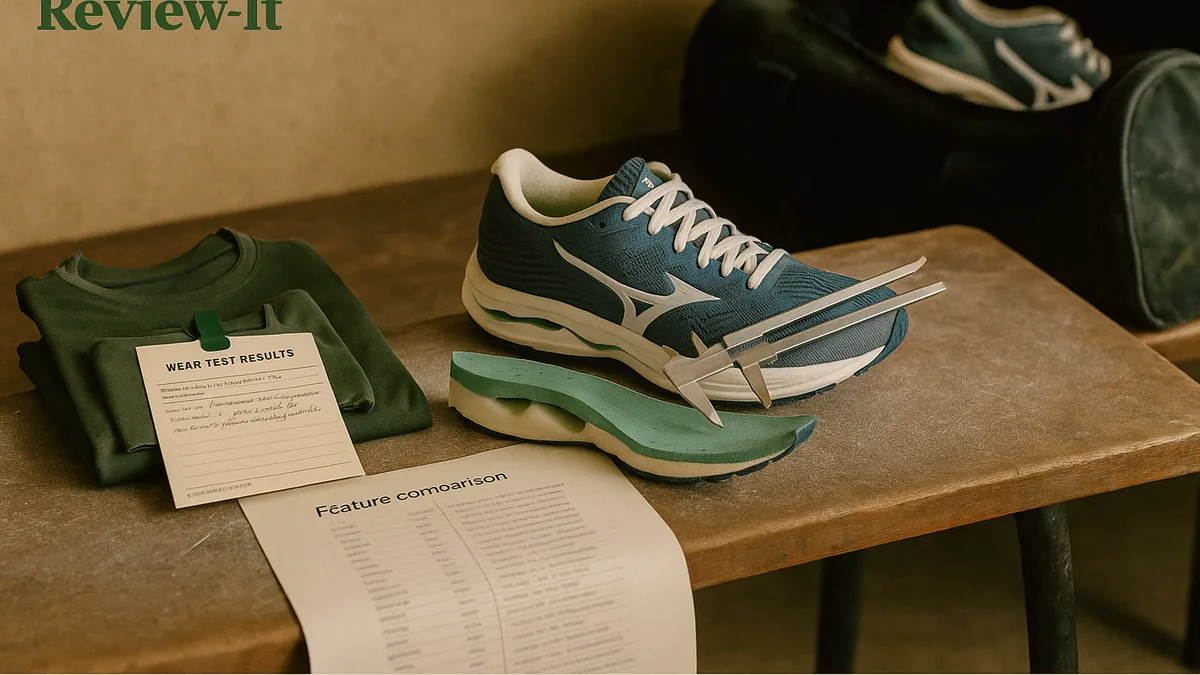
Mizuno offers a useful case study in what sustained category commitment looks like over time. The brand has never positioned itself as a lifestyle label or a fashion reference point. Its running shoes are developed with a consistency of approach - Wave technology, specific geometry choices, an emphasis on biomechanical suitability - that runners with experience of the brand recognise immediately.
That consistency is a product of focus. Mizuno has not attempted to compete with Nike on cultural relevance, nor with Under Armour on connected fitness technology platforms. It has instead concentrated on the quality of what it builds for specific athletic use cases.
The commercial trade-off is real. Mizuno does not generate the market capitalisation or brand ubiquity of the largest sportswear companies. But within its chosen categories - running, racket sports, baseball - it holds a credibility that many consumers with performance-first priorities actively seek out. That credibility is difficult to manufacture. It accrues through years of category-specific development decisions.
The Risks of Diversification Without Depth
Fila presents an instructive counterpoint. The brand has oscillated between performance positioning and lifestyle positioning across different markets and different periods, and the result has at times been a lack of clarity about what Fila products are actually designed to do well.
At its best, Fila has produced technically capable tennis and training apparel. At its most diversified, the brand has appeared in streetwear contexts, fast fashion collaborations and heritage reissues - none of which necessarily undermines quality, but which collectively make it harder for consumers to form stable expectations about what a Fila product will deliver in a performance context.
This is the central risk of diversification without sufficient depth in any single category: the brand signal becomes ambiguous. Consumers evaluating performance products use brand reputation as a proxy for quality when they cannot fully assess technical specifications at point of purchase. An ambiguous brand signal increases the cognitive load on the consumer and reduces purchase confidence in performance-critical situations.
Scale and Focus Are Not Mutually Exclusive
It would be reductive to argue that large, diversified brands cannot produce excellent products. Nike has built some of the most technically sophisticated running shoes, court shoes and training products in its respective categories. The Air Zoom Alphafly series reflects genuine innovation in marathon performance footwear, driven by serious investment in materials science and biomechanical research.
The distinction worth drawing is between brands that maintain focused development teams and genuine category expertise within a larger organisational structure, and brands that apply a common brand identity to a wide range of products without the underlying technical depth to support each category's specific demands.
Nike achieves both outcomes depending on the category. Its basketball and running divisions reflect decades of focused expertise. Some of its more peripheral product lines reflect the commercial logic of brand extension rather than the technical logic of category mastery. The results in each case tend to reflect which logic was dominant during development.
Under Armour and the Tension Between Performance and Lifestyle
Under Armour built its early reputation on a specific and defensible product claim: moisture-wicking compression base layers that outperformed cotton alternatives for athletes training at intensity. That was a focused product proposition, and it generated rapid, credible growth because the product did exactly what it claimed.
The subsequent decade saw Under Armour expand into footwear, casual apparel, connected fitness software, sports nutrition and a range of adjacent categories. Some of that expansion was commercially logical. Some of it stretched the brand's technical authority beyond what its development infrastructure could comfortably sustain in every segment.
The tension between performance credibility and lifestyle aspiration is one that many sportswear brands navigate imperfectly. Under Armour's trajectory illustrates how a brand can dilute its most defensible position by attempting to occupy too many simultaneously. The compression base layer remains a strong product. But the broader category authority the brand once held in performance training apparel has become more contested as competitors with narrower focus have built comparable technical credibility in specific segments.
Why Consumers Benefit From Focused Brands
From a consumer perspective, focused brands reduce the research burden. When a brand has genuine depth in a single category, its product range tends to be structured in a way that helps consumers identify the appropriate specification for their activity level, body type and performance requirement.
A brand that produces twenty versions of a running shoe, each calibrated for a specific combination of foot strike pattern, weekly mileage and terrain, is making it easier for informed consumers to find the right product - even if the catalogue appears superficially complex. The complexity is organised around genuine variation in use case.
A brand that produces two hundred products across twenty categories, each described in the same marketing language regardless of technical specification, creates a catalogue that is superficially accessible but substantively harder to navigate. The breadth that appears to offer more choice often delivers less useful differentiation.
The Role of Material Knowledge
Technical performance apparel and footwear depend on material science that takes time and investment to understand at a granular level. The properties of different compression fabrics, the behaviour of moisture-wicking knits under sustained exertion, the mechanical characteristics of different foam compounds in cushioning - these are not general knowledge. They are developed through sustained engagement with specific performance problems.
Brands with long histories in a single category accumulate this knowledge in ways that newer entrants or diversifying competitors find difficult to replicate quickly. The knowledge is embedded in development teams, in supplier relationships, in the iterative feedback loops between product engineers, athletes and manufacturing partners.
When a brand enters a new category, it is not simply applying a new label to an existing capability. It is starting a new learning process, often against incumbents who have been running that process for decades. The product quality that results in the early years of category entry frequently reflects that gap, even when the marketing language makes no acknowledgement of it.
Measuring the Advantage
Product focus creates competitive advantage through several reinforcing mechanisms. Accumulated technical knowledge in a defined area produces better-specified products. Better-specified products generate stronger consumer trust within that category. Stronger consumer trust reduces the cost of acquisition for subsequent products and increases retention among repeat buyers.
Focused brands also tend to attract consumers who are more informed about the category and more demanding of performance outcomes. These consumers are often influential within their communities - running clubs, training groups, sports teams - and their recommendations carry weight. The marketing value of genuine product credibility among knowledgeable consumers is significant and durable in ways that broad advertising campaigns are not.
The financial metrics are more mixed. Focused brands typically generate lower absolute revenues than diversified competitors. But margin profiles, brand loyalty indices and net promoter scores in performance categories often favour the focused player over the diversified one, particularly in segments where technical credibility is a primary purchase driver.
Conclusion
The appeal of diversification is understandable. More products, more markets, more revenue potential. But the evidence from performance apparel and footwear suggests that the brands which sustain genuine consumer trust over time tend to be those that have chosen depth over breadth at key points in their development.
That discipline is not easy to maintain as a brand grows. The commercial pressure to extend into adjacent categories, to capture lifestyle consumers, to broaden the addressable market - these are real forces, and resisting them requires deliberate strategic choices. Brands like Mizuno demonstrate that the trade-off can be made and sustained. Others illustrate what happens when the pull toward diversification outpaces the development of genuine category expertise.
For consumers evaluating performance products, understanding which dynamic is operating in a given brand is a more useful framework than simply comparing price points or marketing claims. The question worth asking is not how much a brand offers, but how deeply it understands the specific problem a given product is designed to solve.