.png)
Published
Any brand can describe itself as expert. The word appears on product pages, in campaign copy and across social media profiles with such frequency that it has lost much of its meaning. What separates brands that genuinely communicate expertise from those that simply assert it is a matter of evidence, consistency and the willingness to be specific.
In performance apparel and footwear, this distinction matters more than in most categories. Consumers making purchase decisions about training equipment, technical clothing or sport-specific footwear are often knowledgeable themselves. They notice when claims are vague, when specifications are absent or when a brand's history does not support the authority it projects.
This article examines the mechanisms through which trustworthy brands establish and maintain credibility - drawing on observable behaviour from established players in the performance market to identify what actually works, and why.
The Problem With Claimed Authority
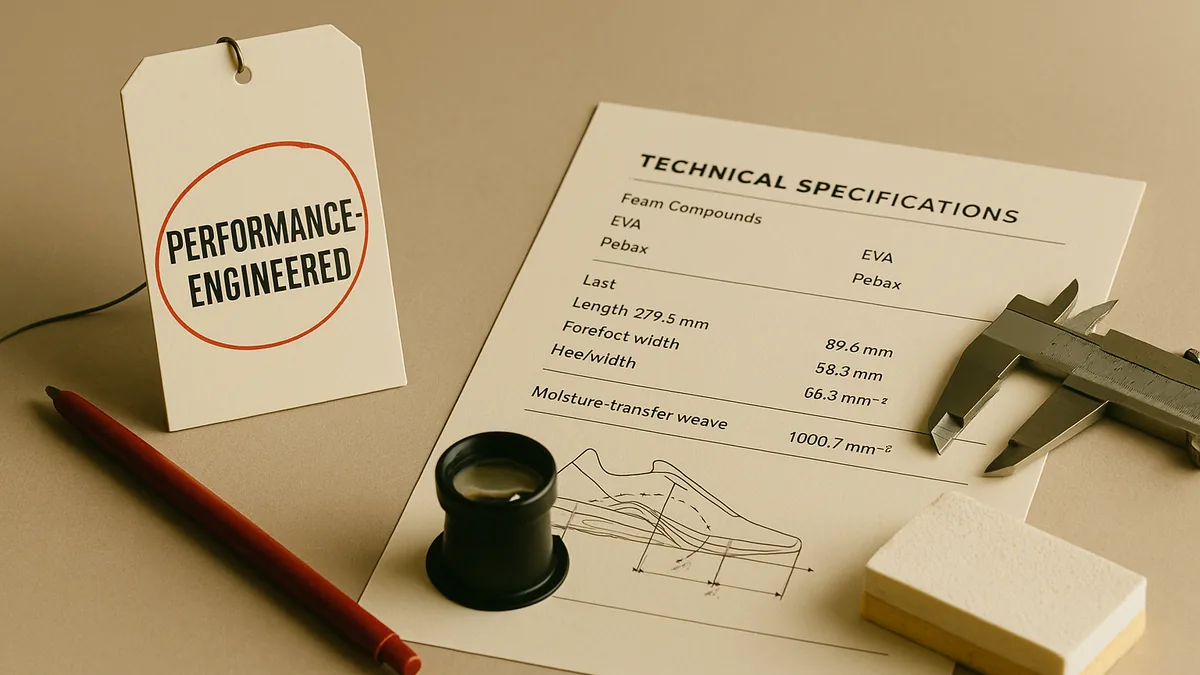
Claimed authority is perhaps the most common mistake brands make when attempting to communicate expertise. Phrases such as "performance-engineered" or "designed for serious athletes" carry no verifiable content. They are positioning statements, not evidence.
Consumers who have spent time in a given category - runners who have tested multiple shoe constructions, martial artists who understand fabric durability requirements, gym-goers familiar with compression mechanics - tend to discount vague language quickly. When a brand cannot or will not explain the reasoning behind its design decisions, trust erodes.
The underlying issue is that authority must be earned through demonstrated knowledge, not declared through adjectives. Brands that understand this communicate differently: they explain trade-offs, acknowledge limitations and provide the kind of detail that only genuine expertise produces.
Specificity as a Trust Signal
Specificity is one of the most reliable signals that a brand actually understands its product category. When a brand names the exact foam compound used in a midsole, explains the rationale behind a particular last shape or describes the specific weave density that affects moisture transfer in a fabric, it is demonstrating knowledge that cannot be faked easily.
ASICS provides a useful example. The brand's GEL cushioning technology has been documented, refined and explained across decades of product communications. The company publishes biomechanical research, explains pronation and its effects on injury risk, and connects those explanations directly to product construction choices. Whether a consumer agrees with every conclusion, the underlying framework communicates genuine engagement with the science of running.
This kind of specificity does more than inform - it signals that the brand has people inside it who think seriously about the problem they are trying to solve. That signal resonates with consumers who are themselves thinking seriously about the same problems.
Heritage as Evidence, Not Decoration
Established brands often lean on heritage as a proxy for expertise. This can work, but only when heritage is presented as evidence rather than decoration. A founding year on a logo communicates nothing on its own. A timeline showing how a particular technology evolved across product generations, or how a brand responded to changes in sport science, communicates a great deal.
New Balance demonstrates this approach effectively. The brand's history in domestic manufacturing - maintained partly in the United States and the United Kingdom - is not simply nostalgia. It is presented as a functional argument: that keeping production close to development allows for faster iteration and tighter quality control. Whether consumers accept that argument is secondary to the fact that it is an argument, not merely a slogan.
Heritage becomes credibility when it is connected to current practice. When it is disconnected - when a brand invokes its history while producing products that bear no relationship to that history's values - the effect is counterproductive. Knowledgeable consumers notice the gap.
Transparency About Trade-offs
Trustworthy brands are willing to acknowledge that every design decision involves a compromise. A lighter shoe may sacrifice durability. A tighter compression garment may restrict certain movements while supporting others. A natural fibre may breathe well but dry slowly. Brands that explain these trade-offs rather than obscuring them tend to build more durable trust than those that present their products as solutions without limitations.
This kind of transparency requires confidence. A brand that is uncertain about whether its product is genuinely fit for purpose will avoid discussing limitations because it fears losing the sale. A brand with genuine confidence in its product positioning can afford to say "this works well for X and less well for Y" because it trusts that its target consumer is primarily X.
Reebok's more credible communications in the fitness and cross-training space have tended to follow this pattern - explaining that a shoe optimised for lateral movement in a gym environment is not the first choice for distance running, rather than claiming universal performance. That honesty, when it appears, functions as a trust signal precisely because it is commercially inconvenient.
The Role of Consistent Positioning
Expertise is not communicated through individual pieces of content - it accumulates across every touchpoint a brand creates. A technically detailed product page sits alongside an influencer partnership, a retail presence and a customer service experience. When these elements are consistent in their depth and accuracy, they reinforce each other. When they contradict each other, the less credible element tends to define the consumer's perception.
PUMA illustrates the tension here. The brand has genuine performance heritage in athletics and football, and its technical product lines reflect real understanding of sport-specific requirements. However, its broad positioning across lifestyle, fashion and performance creates a challenge: it is harder to project domain expertise when the brand is simultaneously communicating across many domains. This is not a failure unique to PUMA - it is a structural difficulty for any brand that operates across a wide market spectrum.
Brands that maintain a tighter focus tend to communicate expertise more convincingly, simply because every communication reinforces the same core understanding rather than diluting it across multiple identities.
Third-Party Validation and Its Limits
Many brands use third-party validation - athlete endorsements, independent testing results, podiatrist recommendations - as evidence of expertise. This approach has real value when the validation is genuinely independent and relevant. A biomechanist's assessment of a shoe's stability characteristics means something. A professional athlete's stated preference, when that athlete is contracted to the brand, means considerably less.
Consumers have grown more sophisticated about this distinction. The question is not simply whether a brand has external endorsement, but whether that endorsement is from a credible, independent source with relevant knowledge. Brands that can secure and present genuinely independent positive assessment - published research, real-world testing data, unsolicited recommendations from recognised practitioners - communicate expertise more effectively than those relying on paid testimonials.
The reverse also applies. When independent testing produces results that differ from a brand's claims, how the brand responds is itself a communication of expertise. Brands that engage with discrepancies, explain context or acknowledge limitations demonstrate confidence in their knowledge. Brands that ignore or dispute inconvenient findings undermine the credibility of all their other claims.
Language, Tone and the Expertise Signal
The language a brand uses across its communications is itself a form of expertise communication. Technical accuracy, appropriate use of terminology and the absence of inflated claims all signal that the people writing the content understand the product category. Conversely, misused technical language - applying terms incorrectly, using scientific-sounding words without substantive content - signals the opposite.
This extends to tone. Expertise tends to communicate quietly. Brands that feel the need to repeatedly emphasise how expert they are often do so because the evidence of that expertise is not visible elsewhere. Brands whose product development, manufacturing choices, athlete partnerships and content all reflect genuine understanding rarely need to make the claim explicitly - the claim is implicit in everything else.
That quiet confidence is, paradoxically, one of the strongest trust signals available. It suggests a brand that knows what it knows and does not feel threatened by what it does not.
Conclusion
Communicating expertise credibly requires more than good copy. It requires that the expertise being communicated is real, that it is expressed through specific and verifiable detail, that it is consistent across every point of contact, and that it is honest about its own limits.
The brands that do this well - that connect heritage to current practice, explain trade-offs, present genuine third-party evidence and use technical language accurately - tend to build trust that survives the inevitable moments when something goes wrong. They have established enough credibility in the good times that consumers extend more understanding in the difficult ones.
For consumers navigating a category where claims are abundant and evidence is often thin, the practical implication is straightforward: look past the adjectives. The brands worth trusting are the ones that explain themselves clearly, acknowledge what their products are not for as readily as what they are for, and demonstrate knowledge through substance rather than assertion.