.png)
Published
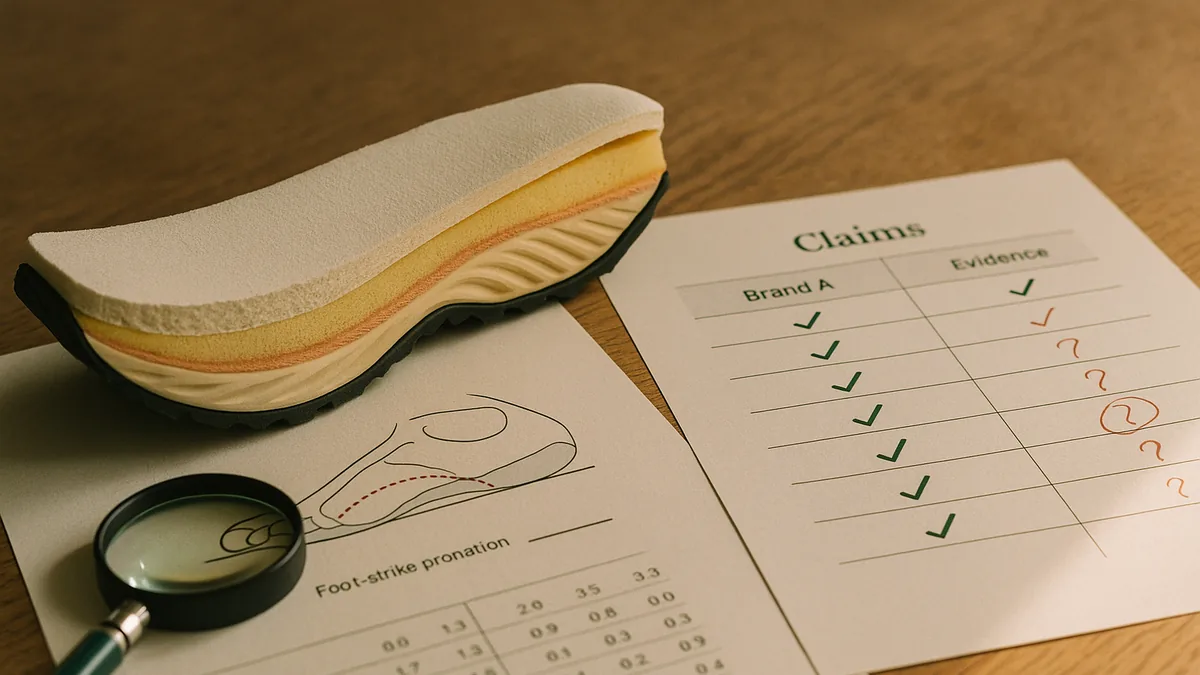
Perceived expertise is one of the most commercially powerful assets a brand can hold. Consumers who believe a brand genuinely understands their sport, their body or their training are far more likely to trust its products, pay a premium and remain loyal over time.
The mechanisms behind that perception vary considerably. Some brands build expertise through decades of biomechanical research. Others lean on athlete endorsements, heritage narratives or carefully managed category focus. A few manage to project authority that runs well ahead of what their product range can actually substantiate.
This ranking assesses six sportswear brands specifically on how effectively and how credibly they construct perceived expertise. The criteria include: depth of specialist positioning, consistency of messaging, quality of technical communication, credibility of athlete or institutional relationships, and the degree to which product reality supports the claims being made.
The order reflects editorial judgement across those dimensions. It is not a straightforward measure of sales performance or brand popularity.
The Rankings
1. ASICS
Strengths: ASICS has one of the most coherent expertise narratives in sportswear. Its founding acronym - Anima Sana In Corpore Sano, meaning "a sound mind in a sound body" - is not merely decorative. The brand has consistently backed that philosophy with substantive investment in biomechanical research through its Institute of Sport Science in Kobe, Japan. Technical communication around pronation, cushioning systems and foot strike patterns is genuinely detailed, and ASICS tends to explain the science behind its product decisions rather than simply asserting that innovation exists.
Weaknesses: Outside running and court sports, ASICS has struggled to establish comparable authority. Attempts to enter lifestyle and fashion-adjacent markets, while commercially understandable, have introduced a degree of dilution. Consumers who encounter ASICS primarily through its retro-influenced trainer range may not associate the brand with performance science at all.
Ideal user: Serious runners, tennis players and athletes who engage with technical product specifications and expect a brand to earn trust through substance rather than imagery.
Reason for placement: ASICS leads this ranking because its expertise claims are consistently supported by institutional infrastructure, longitudinal research and genuinely detailed technical communication. The gap between what it claims and what it demonstrates is narrower than for any other brand in this group.
2. Mizuno
Strengths: Mizuno has maintained a remarkably focused positioning across running, baseball, volleyball and golf for well over a century. Its Wave technology, developed in the late 1990s and continuously refined, represents a recognisable and proprietary approach to cushioning and stability. What distinguishes Mizuno is that its expertise feels earned within specific disciplines rather than broadcast across the entire sporting landscape. The brand has a reputation among performance communities that tends to be disproportionate to its mainstream visibility.
Weaknesses: That same focus creates a ceiling. Mizuno's expertise positioning is credible precisely because it does not overreach, but this also means it remains largely invisible to consumers outside its target categories. Its communication is often reserved to the point of being inaccessible for those without prior familiarity.
Ideal user: Specialist athletes in running, volleyball and racquet sports who value understated technical credibility and are likely to seek out product information independently.
Reason for placement: Mizuno ranks second because its expertise is genuinely narrow and deep - a harder thing to sustain than broad-category authority. The brand's credibility within its domains is high, even if its overall reach is limited.
3. Under Armour
Strengths: Under Armour built its early expertise narrative almost entirely on fabric technology and moisture management, and that origin story remains a useful anchor. Its investment in connected fitness platforms and biometric tracking gave the brand a credible position in the performance data space for several years. The emphasis on training science and athletic performance, rather than lifestyle, has broadly held.
Weaknesses: Under Armour's expertise positioning has become less coherent since its mid-2010s peak. The sale of its connected fitness division, combined with inconsistent product-line expansion and shifting brand messaging, has left some ambiguity around where exactly the brand's authority lies. Competing against larger rivals without a comparably differentiated technical claim has made the expertise narrative harder to sustain.
Ideal user: Training-oriented consumers who prioritise performance fabrics and are drawn to the functional aesthetic that Under Armour has historically represented.
Reason for placement: Under Armour places third for having constructed a genuinely functional expertise narrative, albeit one that has grown less precise over time. Its foundations remain credible; the current execution is less consistent.
4. PUMA
Strengths: PUMA has used high-profile athlete partnerships in football, sprint athletics and motorsport to build associative expertise - the suggestion that if the world's fastest athletes wear PUMA, the brand must understand elite performance. Its NITRO cushioning range represents a more recent attempt to build technology-led credibility in the running market, with third-party validation from running publications adding some external weight to its claims.
Weaknesses: PUMA's identity has historically oscillated between performance and lifestyle, which makes sustained expertise positioning difficult. The brand's messaging is not always consistent enough to reinforce a specific technical authority, and it operates in a broad enough space that consumers may not associate it with expertise in any one category.
Ideal user: Consumers who are engaged with football, sprint performance or the crossover between sport and street culture, and who respond to athlete association as a credibility signal.
Reason for placement: PUMA ranks fourth because its expertise is real in parts but unevenly communicated. Its technical investment is genuine; the challenge is that the brand does not always allow that investment to define consumer perception above its lifestyle credentials.
5. Champion
Strengths: Champion holds a form of expertise through heritage. Founded in 1919 and credited with inventing the reverse weave sweatshirt as a solution to fabric shrinkage, it has a defensible claim to manufacturing knowledge rooted in practical problem-solving. Among consumers who value authenticity and provenance over technical specification, Champion's expertise narrative carries genuine weight.
Weaknesses: Champion's expertise claim is largely historical. Its current product range is weighted heavily towards casualwear and lifestyle, and the brand has not consistently invested in performance innovation or technical communication at a level that would support contemporary expertise positioning. The revival of its cultural cachet in the late 2010s was driven more by nostalgia than by functional credibility.
Ideal user: Consumers who value heritage branding and casualwear with a sporting pedigree, rather than those seeking performance-validated technical products.
Reason for placement: Champion ranks fifth because the expertise it holds is real but largely historical. It is credible as a witness to the past rather than as a technical authority in the present.
6. Fila
Strengths: Fila has a longer sporting heritage than many consumers recognise. Originally a textile manufacturer from Biella in northern Italy, it developed a presence in tennis and skiing that gave it genuine category associations. Among enthusiasts of vintage sportswear, Fila's historical positioning in tennis - connected to players such as Björn Borg - carries some residual credibility.
Weaknesses: Fila's contemporary identity is overwhelmingly lifestyle-driven. Its expertise narrative, where one exists at all, depends almost entirely on historical association rather than current technical investment or sporting relevance. The brand rarely makes performance claims it can substantiate with research or product data, and its marketing does not attempt to construct a coherent technical authority.
Ideal user: Consumers purchasing for aesthetic and cultural reasons, with little expectation of performance innovation or technical expertise.
Reason for placement: Fila ranks sixth because its expertise positioning, in any meaningful contemporary sense, is the least developed of the six brands assessed here. The heritage is real; the current expression of expertise is largely absent.
Conclusion
Perceived expertise is constructed through a combination of institutional investment, consistent messaging, technical credibility and the alignment of product reality with brand claims. The brands at the top of this ranking succeed because their expertise is substantive, not merely asserted.
ASICS and Mizuno demonstrate that deep, narrow focus produces more durable credibility than broad-category ambition. Under Armour and PUMA show that technical investment alone is insufficient without consistent communication to anchor it. Champion and Fila illustrate that heritage can serve as a foundation for expertise positioning, but only if that foundation is actively maintained rather than relied upon as a passive asset.
For consumers, the practical takeaway is that perceived expertise and actual expertise are not always the same thing. Scrutinising the specifics of technical claims, looking for institutional backing and asking whether a brand's product range genuinely supports its stated positioning will generally produce better purchasing decisions than responding to brand authority as if it were self-evident.
The most credible brands in this category are those that are willing to explain their reasoning, not simply assert their authority.