.png)
Published
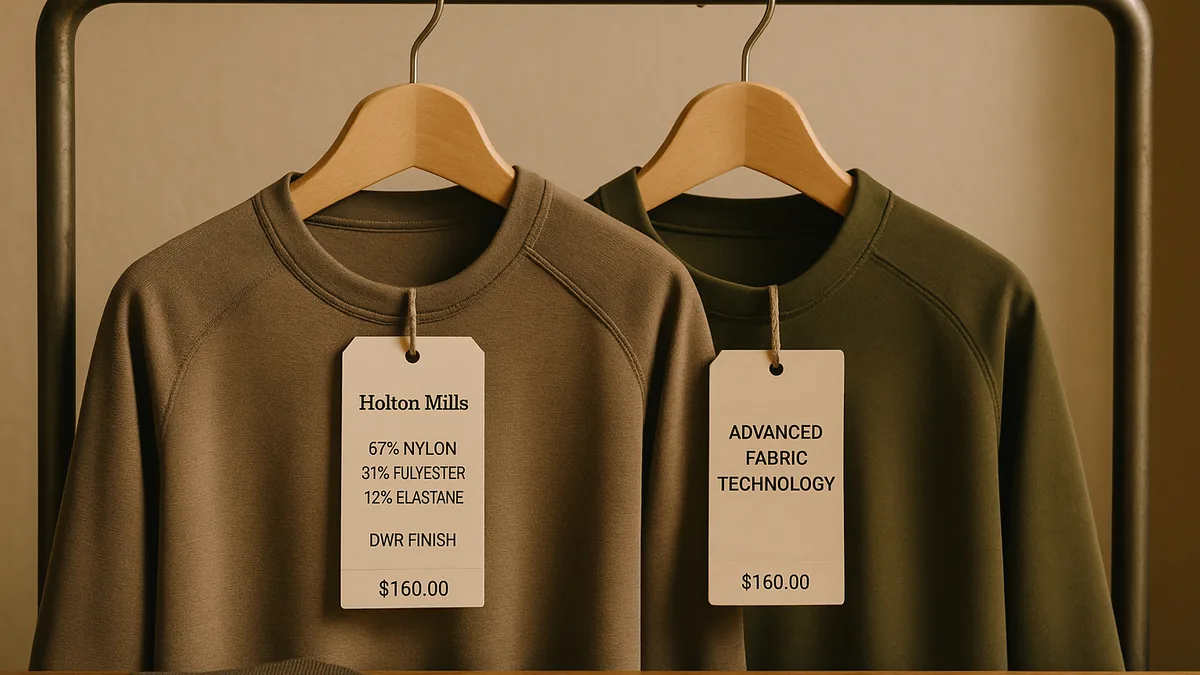
Premium positioning is one of the most studied and most misunderstood dynamics in consumer markets. Brands invest heavily in presenting themselves as worth more than their competitors, yet the signals that actually persuade consumers to pay a premium are rarely the ones marketers prioritise.
The gap between perceived value and actual value is where consumer trust is won or lost. A higher price point does not, by itself, communicate quality. It communicates intent. Whether buyers accept that intent as credible depends on a cluster of factors that operate largely beneath conscious awareness.
Understanding how this evaluation works in practice matters for anyone assessing brand credibility, whether they are consumers making purchasing decisions or analysts trying to read the market accurately.
The First Filter: Coherence
Before a consumer evaluates individual product attributes, they perform an unconscious coherence check. They ask, implicitly, whether the brand's presentation holds together. Pricing, visual identity, channel choices, material claims and brand language all need to align.
When they do not, even a genuinely well-made product creates doubt. A premium-priced garment sold through a discounting platform, or a brand that claims technical superiority but cannot explain how that superiority is achieved, tends to fail this first filter regardless of the product's actual merits.
Coherence is not the same as consistency. A brand can be consistent in its visual identity and still be incoherent if its claims and its evidence point in different directions. The coherence check is about whether the whole picture makes sense.
Material and Construction Claims
In the apparel and activewear sector, material provenance is one of the most reliable premium signals available to consumers. Specific fabric names, yarn origins and construction methods allow buyers to investigate independently, which itself reinforces credibility.
Vague language erodes trust. A garment described as using "advanced fabric technology" communicates very little, whereas one that names the mill, the fibre blend and the finish gives consumers something to evaluate. This specificity signals confidence - the brand is prepared to be held accountable for its claims.
Brands operating at the higher end of the technical apparel market have largely understood this. Veilance, Arc'teryx's urban performance line, has built sustained credibility partly through detailed material transparency, naming fabrics, weights and treatments in ways that reward consumer research rather than deflect it.
The presence of specific, verifiable claims does more to justify a premium price than photography or lifestyle marketing. Consumers who are genuinely considering a significant purchase will often seek to verify what they are told.
The Role of Community and Cultural Positioning
Premium positioning does not operate in isolation. Consumers evaluate brands partly through the lens of who else is associated with them. This is not simply aspiration; it is a form of social proof that helps buyers assess whether a brand's claims are regarded as credible by people whose judgment they trust.
Satisfy Running has demonstrated this effectively in the trail and ultra-running space. The brand's premium pricing is supported by genuine visibility among serious competitors and distance runners, a community that tends to be sceptical of marketing. That credibility transfer is meaningful - it is harder to fabricate than editorial coverage and more durable than paid placement.
The risk, however, is that community positioning can become circular. A brand that cultivates the appearance of a credible community without the underlying substance eventually encounters consumers who can distinguish between organic adoption and manufactured association.
Narrative Versus Evidence
Brand storytelling is a legitimate tool for communicating values and heritage, but it tends to function differently at different price points. At mass-market levels, emotional narrative often carries considerable weight because the financial risk of a purchase is low. At premium levels, narrative needs to be substantiated.
Consumers spending significantly more than average on a product are, in many cases, actively looking for reasons to justify that decision. They want the story to be true, but they also want evidence that it is. A compelling origin story or craft narrative that cannot be connected to observable product characteristics tends to increase rather than reduce scepticism.
This is where some aspirational activewear brands find themselves in difficulty. Rhone, for instance, has invested in positioning around performance and professional culture. Where that narrative is supported by specific product choices - fabrics, construction details, functional features - it tends to land. Where it relies primarily on imagery and association, buyers who investigate more carefully often feel the gap.
The more useful framing is to treat narrative as context and evidence as content. The story sets up the product; the product has to deliver.
Price Architecture and Range Logic
How a brand structures its range communicates almost as much as the products themselves. Premium positioning is undermined when the price architecture is inconsistent - when a brand's entry-level products sit at a price point that conflicts with its claimed positioning, or when the gap between its most and least expensive products is difficult to justify on product grounds alone.
A coherent range gives consumers a clear sense of what they are paying for at each tier. It also helps them trust that the premium items in the range represent genuine development rather than simply an upcharge on standard product.
Vuori is an instructive example here. The brand occupies a mid-to-premium position in the activewear market, and its range logic is relatively transparent - consumers can trace a clear line between price points and the material or functional differences that justify them. That legibility makes the premium tier more credible, even if the absolute prices are not exceptional by market standards.
Durability Claims and the Long-term Relationship
One of the more powerful premium signals, and one that is under-used in practice, is an explicit commitment to durability. A brand that states its products are designed to last, and provides the construction evidence to support that claim, is making a different kind of argument to one that positions on performance alone.
Durability claims shift the pricing conversation from cost to value. A garment that costs significantly more but lasts several times longer represents a different economic proposition to a cheaper product with a shorter lifespan. Consumers who are genuinely evaluating quality, rather than responding to aspiration, tend to find this framing persuasive.
The challenge is that durability is a claim that can only be verified over time. Brands making durability arguments need to support them with repair programmes, guarantee structures or material data that gives buyers reasonable confidence before the purchase is made.
Return Policy and Post-purchase Behaviour
The way a brand behaves after the point of sale is increasingly part of how consumers evaluate premium claims before the point of sale. Return policies, customer service quality and the handling of product issues are now visible in ways they were not a decade ago. Consumer reviews, social media responses and forum discussions mean that post-purchase behaviour is effectively a public record.
A generous, low-friction return policy at a premium price point signals confidence in the product. A restrictive policy at the same price point tends to raise questions. Buyers reasoning about whether a brand is genuinely confident in what it sells will often read the return terms as evidence.
This is not a trivial operational detail. It is part of the credibility architecture that surrounds the product itself.
When Premium Positioning Fails
Premium positioning fails most reliably when the gap between what is claimed and what is delivered becomes publicly visible. This can happen through product failures, through inconsistency between brand communication and consumer experience, or through the kind of investigative consumer culture that has grown significantly in online communities.
Brands that have invested primarily in the aesthetics of premium positioning, without the underlying product and operational substance to support it, tend to be fragile when scrutiny arrives. The correction can be rapid. Consumer communities are often more effective at identifying and communicating these gaps than traditional media.
Conversely, brands that have earned genuine credibility tend to weather individual product or service failures more effectively, because the broader pattern of evidence supports their claims even when specific instances fall short.
Conclusion
Consumer evaluation of premium positioning is more rigorous, and more evidence-sensitive, than many brands appear to assume. Price alone communicates ambition, not credibility. The signals that actually move informed buyers are coherence, material specificity, verifiable claims, range logic and post-purchase behaviour.
Brands that understand this tend to invest differently. Rather than concentrating resources in brand imagery and lifestyle association, they focus on building a body of evidence that supports the claims they make - evidence that can be found and verified by consumers who are genuinely motivated to look.
The market for premium product is not composed of credulous buyers. It is, in large part, composed of exactly the kind of consumers who will check, compare and discuss. Positioning that holds up under that scrutiny is durable. Positioning that does not will eventually be found out.